Showing posts with label politics. Show all posts

Thursday, March 7, 2013

A London confab of philosophers

The end of May will see a one-day symposium on The Social and Political Thought of Mary Wollstonecraft, hosted by that very special constituent of the University of London, Birkbeck College, "a world-class research and teaching institution, a vibrant centre of academic excellence and London's only specialist provider of evening higher education". Best of all, the event is freely open to everyone. Thursday 30 May, 9am to 5pm: mark your diaries now. Its description: 
Mary Wollstonecraft is by any accounts a remarkable and versatile thinker. Long appreciated as an inspirational and visionary feminist, she was also a noted historian, travel writer, educator, novelist and activist. Only recently, however, is she being rediscovered as an important and innovative philosopher in her own right, and one who deserves to be studied and understood not only as a product of her time, or through the canon of male writers who influenced her, but firmly on her own terms.
The papers in this symposium explore Wollstonecraft’s ideas both in relation to other female writers of the period and as providing valuable insights into issues of contemporary political relevance such as the nature of rights and the accommodation of cultural diversity.
The event brings together several of the speakers at the 220th anniversary of the publication of A Vindication of the Rights of Woman, including Sandrine Berges, our first guest blogger. Also present a year ago at Mary Wollstonecraft: Philosophy and Enlightenment was Lena Halldenius, its organiser, who very kindly invited me to the official dinner, and Alan Coffee, the London philosopher whose interest in MW is matched only by his interest in Frederick Douglass (and thereby hangs a tale). Martina Reuter was at Lund as well, and Barbara Taylor and I shared the Woman's Hour hotseat two years ago. The speakers:

Sandrine Berges (Bilkent University): Wollstonecraft and Sophie de Grouchy
Alan Coffee (King’s College London): Diversity and the Virtuous Republic
Lena Halldenius (Lund University): Wollstonecraft and Representation
Susan James (Birkbeck College London): Wollstonecraft and Rights
Martina Reuter (Jyvaskyla University): Wollstonecraft’s Critique of Rousseau
Barbara Taylor (Queen Mary): Wollstonecraft and Modern Philosophy

Wednesday, February 6, 2013

Namechecked on Newsnight

Mary Wollstonecraft (but not, alas, Frances Blood) was mentioned yesterday on Newsnight, one of the BBC's leading current affairs programmes. Last night the House of Commons voted in favour of same-sex marriage. A lot of MPs were all, "Oh, teh churchez", and in fact the Church of England is specifically excluded in legislation, with a kinky sounding quadruple lock. BUT! Some religions want in: the Quakers, the liberal Jews, and the Unitarians. So a crew was sent to the little church that radicalised Mary. Here's Allegra Stratton's report:

Many Conservative rebels feared that religious organisations, due to have to opt in if they want to hold gay weddings, would actually feel coerced. One Unitarian church up in North London is already gung-ho.
Up here in Newington Green, historically outside the City of London, they have always made up their own rules. Mary Wollstonecraft worshipped here; so too did Tom Paine and people like Benjamin Franklin. And now, 300 years on, they'd like to be able to let gay couples marry.
David Cameron may think he's more in the mould of somebody like Wollstonecraft's rival, Edmund Burke, but in this he is a radical. David Cameron wants gay couples to be able to marry precisely because he's a Conservative, not despite being one.
As I've often said, marriage is the least queer option. I wonder if the two young schoolteachers in this special village would have chosen marriage, had it been available to them in 1785. They had more or less run away to set up a new life, living and working together, offering education to girls and a refuge to an abused wife, Mary's sister. To anyone who says marriage is an eternal institution that the state shouldn't interfere with, I have two words: marital rape. Remember how recently that was outlawed; prior to 1991, it was just part of the legal bargain, sexual access for financial support. Or for a point roughly equidistant between Mary's time and ours, the Married Woman's Property Acts (1870 and 1882), before which every penny a woman owned and every article of clothing on her back belonged to her husband. No wonder that other Famous Dead Bisexual near Mary's first grave decided to spend her life with a woman by her side and not a man. Much safer. Times change.

Who'll be the first same-sex couple to marry in Mary's church? Will they be conservatives or radicals, or both?
...

Monday, February 20, 2012

Presidents' Day, Family Day

In the United States it is Presidents' Day*. In parts of Canada, it is Family Day**. What would Mary think? She preferred presidents to monarchs, and family to both. She made her own family in Newington Green, with gentle Frances and rescued sister.

Does anyone want to start a campaign for a Mary Wollstonecraft Day? It doesn't have to start off as a worldwide paid day off. It could be like Apple Day, which is not sponsored by the Apple Marketing Board, or Apple Corp. (Aside: I saw a "Sent from my iPhone" at the end of a message, except it was space-curtailed. The truncated version said "Sent from my iPho". For a second my brain misfired. "What? Steve Jobs's ghost is serving Vietnamese soup? Someone has to tell them when to stop!")

------------------------
*Wikipedia has two whole paragraphs about the apostrophe issue. 
I decree a LOVE YOUR PEDANTS DAY.

**Same day, different name in Manitoba: Louis Riel Day. 
Best Tshirt spotted in Toronto: portrait of the rabble-rouser, captioned Keepin' it Riel. 

Photo of Riel is in the public domain, see here.

Wednesday, February 8, 2012

Vindication: new resources

If I estimate that perhaps one in a hundred Britons could tell you who Mary Wollstonecraft is, not one in a hundred of those cognoscenti would know that the Vindication that she is remembered for was her second. Fourteen months before, she had published A Vindication of the Rights of Men, a response to Edmund Burke's essay attacking her mentor Richard Price, the minister to the Dissenters of Newington Green. It was that book that made her an intellectual celebrity, placing her name firmly on the map of lettered London, and hence A Vindication of the Rights of Woman, published exactly 220 years ago, was received with interest and widely read; even if many disagreed with its conclusions, they paid the book and its author the respect of engaging with the arguments.

Now for some resources not covered in our recent recap: Taking Liberties, "the 900-year struggle for Britain's freedoms and rights in key documents", was the winter 2008/09 temporary exhibition at the British Library. It situates the Vindication in what it calls the human rights group, stretching back to 1690 Locke's Treatises, via the Minutes of the Committee for Effecting the Abolition of Slavery (1787),  and forward to the 1948 UN Declaration of Human Rights (an obvious choice) and, its last entry, the 1957 Wolfenden Report (a braver choice). The exhibition website (as good in its way as the one of Shelley's Ghost) describes the Vindication thus: "The firmly-argued book, written in the tumultuous period following the French Revolution, was one of the first great works of female emancipation - but the goals she advocated took many decades to attain."

A Vindication draws on the parallels between women's position and that of slaves. It is worth mentioning the environment in which the author developed these ideas. The 1787 committee had a dozen members, all men: nine Quakers and three Anglicans, including William Wilberforce. A non-denominational (or multi-denominational) pressure group was thought to be more effective than one composed exclusively of those outside the establishment: Quakers could not stand for Parliament, and suffered other civil disabilities. It is only fair to remember, however, that abolitionism began with the Society of Friends - a lesser known committee, entirely of Quakers, preceded this famous one by three years. Not surprisingly, some of its members, such as Joseph Woods senior and Samuel Hoare junior, lived at Stoke Newington, a village popular with that sect and due north of the City of London, an easy journey for merchants who wanted the benefit of fresh country air for their growing families. It also happens to be the neighbouring village to Newington Green. This was the environment in which Mary was radicalised; from her childhood she knew that the world could be a harsh and unjust place, but there she learned to see its injustices through political eyes.

One final resource: the avid readers at A Year of Feminist Classics devoted January 2011 to reading A Vindication, and their comments are preserved. Their year proved so productive that they are continuing into 2013, according to the reading list.

Coming up are some interpretations -- or, you could say, translations -- of A Vindication of the Rights of Woman.

Friday, December 9, 2011

Journalist or socialist? A talk

I have been invited by Keith Flett, of the Beard Liberation Front, to address the London Socialist Historians Group, and have chosen as my subject "Mary Wollstonecraft: Journalist, socialist, or somewhere else on the political spectrum?" This is based on a hand-written commendation solicited from Melvyn Bragg: it took some cryptography to crack the inky code, and we got stuck on the phrase "she was an inspirational <squiggle>". One faction held to the view that <squiggle> was a journalist, whilst the other maintained it was a socialist. Meanwhile, on Twitter I have people telling me they see her as a libertarian.  It seems a good opportunity to explore the issues.

So, a date for your diary: Monday 19 March 2012 at 5.30pm. The talk is at the Institute of Historical Research, in Senate House on Malet Street WC1. It's all part of the University of London.

Thursday, November 17, 2011

Mother of feminism, mother of Parliaments

Mary Wollstonecraft illuminated the Houses of Parliament on Wednesday evening, and London didn't know what had hit it. Mary on the Green, the campaign to raise a fitting memorial to the foremother of English feminism, was out in force, leafletting on Westminster Bridge.

I think I'll let the pictures tell the tale. NB there were two images, which the projectionists cycled between. Is the caption clear enough? That's www.maryonthegreen.org.


Photos by Neil Wissink, who says he's "happy for anyone to use the photos with due credit". 


Tuesday, November 15, 2011

Mary on the Houses of Parliament


This is a mock-up! Reality will be even better.
There is so much going on that I hardly know where to start. Mary Wollstonecraft will be beamed across the Thames onto the Houses of Parliament in the early dusk of November 16. The rumour that I quashed about the abseiling lesbians and the whisky chocolate cake is as nothing to the glorious truth: a giantic projection will wow the crowds from 4-6pm on Wednesday, and will pop up all over the media in the days to come. This is the kick-off to serious fundraising for the Mary on the Green campaign I wrote of last month.

Another piece of good news is that the NatWest CommunityForce scheme has, as a result of your support, awarded £6275 to the campaign to raise a memorial to Our Lady. That is a serious kick-start.

My address to the Fawcett Society last week went well, and next week will be adapted for the Newington Green Action Group's annual Friends Evening. All welcome! As indeed all are welcome to the Girlie Show, a Mary on the Green fundraiser to be held at Snooty Fox, a pub in Newington Green. Somehow I think the overlap between the two events will be ... choice. Possibly only me. That's OK.

If you recognise Mary Wollstonecraft's contribution to the life you lead now, I invite you to consider whether and how you might wish to get involved in the campaign to create a sculpture in her honour.  Remember, there is no substantial memorial to her, anywhere in the world.  (There is a lecture, a lecture hall, a hidden house, and several plaques, but nothing really big and tangible.) Your contributions would be valuable. If you can, please donate. Aside from money, there is much else to do: we need lots of people to spread the word, for example. (On Twitter, look out for and use the hashtag #marybigben.)  If you have other ideas of how you might help, please let me know, in the comments or by email.

Image from http://maryonthegreen.org/latestnews.html 

Tuesday, November 1, 2011

Formal Fawcetts fall for first feminist

The Fawcett Society wishes to find out more about Mary Wollstonecraft, and you are all invited: a week today, Tuesday 8 November, 7pm at Newington Green Unitarian Church, where Mary was radicalised. Dress warmly. The official announcement of this free, open, public meeting is here.

Technically, it is not Fawcett itself that will be soaking up the Wollstonecraft atmosphere that evening, but the East London branch, possibly with their North London sisters. (No doubt they will all take turns, sitting in Mary's pew.) Why do I call the Fawcetts "formal", aside from my woeful weakness for alliteration and allied alphabetical amusements? (And MW wasn't strictly speaking the first feminist.) Because they are the respectable face of British feminism, so much so that they don't even use the f-word. "Fawcett is the UK’s leading campaign for equality between women and men. Where there's an inequality gap between women and men we're working to close it." They lobby Parliament -- effectively. They wear suits and ballgowns, metaphorically and for all I know literally, and they Get Things Done. All power to them. 


As consummate campaigner and secular saint (enough already! - Ed.) Peter Tatchell pointed out, street activists recognise the value of committed negotiators who can get inside the establishment and talk to the power brokers in language they understand. What those who risk arrest don't like is when the besuited intermediaries ignore or belittle their contribution. Without OutRage! noisily and creatively demonstrating, Stonewall wouldn't have had its phone calls to MPs returned, or so went his argument. OutRage! acknowledged this interdependence but Stonewall didn't, or so he said, way back when. See Animal Liberation Front and RSPCA; see Black Power and the civil rights movement; see toffee-hammer-wielding suffragettes and patriotic patient persistent (I said stop! -Ed.) suffragists. I don't know the precise parallel to gender issues -- Riot Grrrls got co-opted into commercial music*, Guerrilla Girls never made it to the National Gallery -- but at any rate, Fawcett is the Stonewall of feminism, and they do what they do very well. "We make real differences in women’s lives by creating awareness, leading debate and driving change. Our lobbying power means we have real influence right at the top of UK politics and among those who make decisions."


The Fawcett ethos is one of liberal reform: "Our vision is of a society where women and our rights and freedoms are equally valued and respected and where we have equal power and influence in shaping our own lives and our wider world." I like to think its members would sit well with the Rational Dissenters of Newington Green, the ones who opened a young schoolteacher's eyes not to the injustices of the world -- she was well acquainted with them already - but with the political dimensions to these injustices. "We campaign on women’s representation in politics and public life; on equal pay, on pensions and poverty; valuing caring work; and the treatment of women in the justice system."

I'll do my show and tell (as I did a year ago at Ignite -- so sad to be missing this autumn's version! -- but if you haven't got tickets by now, you have no chance anyway, so might as well come along to Newington Green). We'll certainly cover the latest developments with Mary on the Green, and perhaps trade campaigning tips. The quiz on Mary (and democracy, and wonderful women worldwide) which I devised for my visit to the neighbouring Stoke Newington WI will not, after all, be reprised -- or not on this night. There is another event coming up, however...stay tuned.

The final reason for my fondness for the Fawcett Society is historical: "We trace our roots back to 1866, when Millicent Garrett Fawcett began her lifetime’s work leading the peaceful campaign for women’s votes."  This was the woman who wrote the introduction to the centenary edition of A Vindication of the Rights of Woman, cleansing Mary's memory and claiming her as a forerunner of the suffrage movement:
The remarkable degree in which she was ahead of her time is shown on almost every page of "The Vindication." She claims for women the right to share in the advantages of representation in Parliament, nearly seventy years before women's suffrage was heard of in the House of Commons. She knows that few, if any, at that time would be found to sympathise with her, but that does not prevent her from claiming for women what she felt was simple justice. She also perceives the enormous importance of the economic independence of women, and its bearing on social health and disease.
I claim MGF as a Lost Daughter.


--------------------------------------
*Oh. Oh no. Riot Grrrls has had its domain squatted by a lifestyle brand, with stockists. Don't look. Oh if you really have to look. Whereas the Guerrilla Girls were media savvy from 1985, and keep a firm hold of their brand name.

The 1891 intro is here. This version (held by Keele) seems to start mid-essay, 
and I can't find anything better at the moment.  Images from the Fawcett Society , 
One War Art for the Riot Grrrl Manifesto, John Gray's blog for the stamp, 
and Guerrilla Girls for the satirical movie poster.

Tuesday, October 4, 2011

A book to save up for

British Library, by Christine Matthews
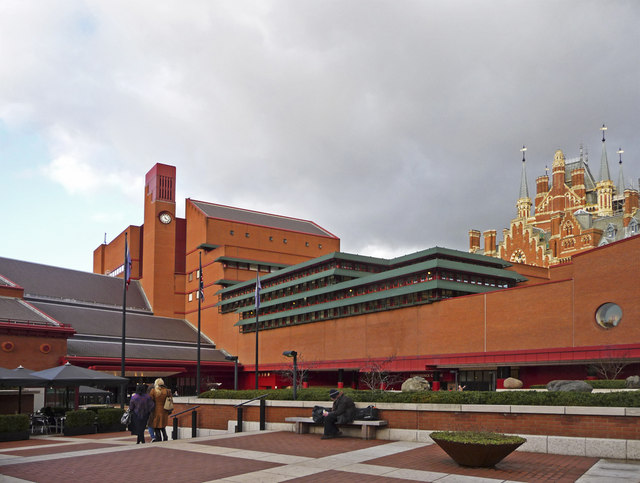
You just know that with a series title such as International Library of Essays in the History of Social and Political Thought, the forthcoming tome on Mary Wollstonecraft is not going to be something to read in the bath.  Working 27.5 hours at current UK adult minimum wage will get you 588 pages of hardback quality. You have until April to save up that £160, or to persuade your favourite library to acquire a copy upon publication. It sounds fantastic, though:
The essays in this collection represent the explosion of scholarly interest since the 1960s in the pioneering feminist, philosopher, novelist, and political theorist, Mary Wollstonecraft. This interdisciplinary selection, which is organized by theme and genre, demonstrates Wollstonecraft's importance in contemporary social, political and sexual theory and in Romantic studies.
It goes all the way back to the beginning, and I hope it will set to rest for once and for all the misconception that both author and magnum opus  were shunned on its publication:
The book examines the reception of Wollstonecraft's Vindication of the Rights of Woman but it also deals with the full range of her work from travel writing, education, religion and conduct literature to her novels, letters and literary reviews.
Most of the content, or possibly all of it, is reprints. Some of the essays go back over a century; some are much more recent: 
As well as reproducing the most important modern Wollstonecraft scholarship the collection tracks the development of the author's reputation from the nineteenth century. The essays reprinted here (from early appreciations by George Eliot, Emma Goldman and Virginia Woolf to the work of twenty-first century scholars) include many of the most influential accounts of Wollstonecraft's remarkable contribution to the development of modern political and social thought. The book is essential reading for students of Wollstonecraft and late eighteenth-century women's writing, history, and politics. 
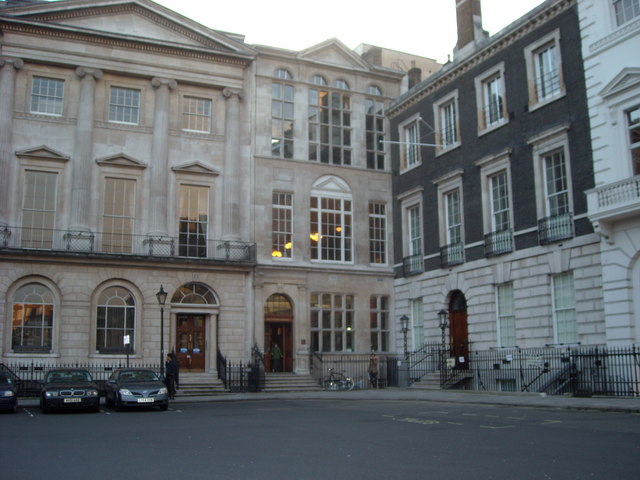
London Library, by Bill Johnson 
It is from Ashgate, which I hadn't heard of before. Others in the International Library of Essays include Tom Paine, Jeremy Bentham, Rousseau, Aristotle, Hannah Arendt, Edmund Burke, and many others. This volume has been edited by Jane Moore, from Cardiff University, a reader in the School of English, Communication and Philosophy -- NB not history.  She wrote a rather more slender book on MW in 1999, at the request of the British Council, part of "a series of innovative critical studies introducing writers and their contexts to a wide range of readers".


What tense should we use for the forthcoming heavy-weight volume: has been edited? Is being? It can't take another six months to print and distribute a book, even if the physical presses are in deepest China. It's funny, isn't it: despite the rush-rush of modern life, so commented upon, some things were much quicker in Mary's day, particularly in the publishing business. Lyndall Gordon says A Vindication of the Rights of Men is "no hasty pamphlet" (chapter 7 of her biography Vindication), but from Mary's letters we know that as she was writing her books, the printer's devil was knocking on the door, wanting to take the manuscript pages to Joseph Johnson for typesetting. No luxury of writing an entire draft, and going back over it before the publisher saw it: rush-rush indeed.


And just look at the contents! This is only partial, but my goodness, am I partial. Random good bits in bold.


Part I Survey of the Work and Reputation:
  • Margaret Fuller and Mary Wollstonecraft, George Eliot; 
  • Mary Wollstonecraft: her tragic life and her passionate struggle for freedom, Emma Goldman
  • Mary Wollstonecraft, Virginia Woolf
  • Feminist studies and the discipline: a study of Mary Wollstonecraft, Virginia Sapiro; 
  • On the reception of Mary Wollstonecraft's A Vindication of the Rights of Woman, R.M. Janes; 
  • Mary Wollstonecraft: texts and contexts, Gary Kelly; 
  • Remembering Mary Wollstonecraft on the bicentenary of the publication of a Vindication of the Rights of Woman, Sylvana Tomaselli. 

Part II Contexts: History, Politics, Culture: Wollstonecraft and Social, Philosophical and Political Theory: 

  • Mary Wollstonecraft: 18th-century commonwealthwoman, G.J. Barker-Benfield; 
  • Wollstonecraft, feminism, and democracy: 'being Bastilled', Virginia Sapiro; 
  • Mary Wollstonecraft and the 'reserve of reason', Simon Swift; 
Wollstonecraft, Gender and Enlightenment: 
  • The Enlightenment debate on women, Sylvana Tomaselli; 
  • Mary Wollstonecraft and Enlightenment desire, Janet Todd; 
  • Wollstonecraft, Education and Conduct Literature: Her demands for the education of woman, Emma Rauschenbush-Clough; 
  • Mary, Mary, quite contrary, or, Mary Astell and Mary Wollstonecraft compared, Regina Janes; 
  • Advice and enlightenment: Mary Wollstonecraft and sex education, Vivien Jones; 
Wollstonecraft and the French Revolution/Wollstonecraft's Historical and Moral View of the French Revolution: 
  • 'The grand causes which combine to carry mankind forward': Wollstonecraft, history and revolution, Jane Rendall; 
  • Gender in revolution: Edmund Burke and Mary Wollstonecraft, Tom Furniss; 
Wollstonecraft and Religion: 
  • For the love of God: religion and the erotic imagination in Wollstonecraft's feminism, Barbara Taylor
  • Sibylline apocalyptics: Mary Wollstonecraft's Vindication of the Rights of Woman and Job's mother's womb, Mary Wilson Carpenter; 
Wollstonecraft and Romanticism: 
  • Death in the face of nature, self, society and body in Wollstonecraft's Letters Written in Sweden, Norway and Denmark, John Whale; 
  • Godwin's Memoirs of Wollstonecraft: the shaping of self and subject, Mitzi Myers; 
  • 'No equal mind': Mary Wollstonecraft and the young Romantics, Harriet Jump;
Wollstonecraft, Femininity/Sexuality/Feminism: 
  • Mary Wollstonecraft and the wild wish of early feminism, Barbara Taylor; 
  • Wild nights: pleasure/sexuality/feminism, Cora Kaplan; 
  • (Female) philosophy in the bedroom: Mary Wollstonecraft and female sexuality, Gary Kelly; 
  • Wollstonecraft, Slavery and the Orient: Mary Wollstonecraft and the problematic of slavery, Moira Ferguson; 
  • Wollstonecraft's Death: The death of Mary Wollstonecraft, Vivien Jones. 
Part III Texts, Novels, Literary Reviews, Letters: 

Wollstonecraft's Literary reviews:
  • Mary Wollstonecraft's contributions to analytical review, Sally N. Stewart; 
Wollstonecraft's Fictions – Mary, A Fiction and The Wrongs of Woman: or Maria, a Fragment: 
  • Mary Wollstonecraft: the gender of genres in late 18th-century England, Mary Poovey;
  • Wollstonecraft and Godwin: reading the secrets of the political novel, Tilottama Rajan;
Wollstonecraft's Letters: 
  • Letters Written…in Sweden: toward Romantic autobiography, Mitzi Myers; 
  • Mary Wollstonecraft's letters, Janet Todd
Note the lacunae: no Lyndall Gordon, no treasure ship, no modern philosophers, no Claire Tomalin, no suffragettes, no charting of the C19 rehabilitation (no Elizabeth Robins Pennell, who I'm rather fond of). But still...


Somehow I have to get my hands on a copy.


Images from Wikimedia Commons.


Tuesday, July 12, 2011

City of Darkness, City of Light

Mary Wollstonecraft is entirely absent from Marge Piercy's novel of the French Revolution, City of Darkness, City of Light. (This review comes to you courtesy of the week remembering Mary and France.) I had hoped to see Mary through the poet's prose; after all, her friend the saloniere Madame Roland is one of the six principal characters whose interleaved stories structure the book. But no, the more than 150 member supporting cast does not have room for her.  A walk-on speaking part I did earnestly desire, but 'twas not to be. Not even the whisk of a petticoat as the hyena left the room: "Sir, had you attended the salon last week, you would have profited from the opportunity to meet Mrs Imlay." No. Nor Gilbert either: not a whisker of him. (Widow is to widower as whisk is to whisker. Hmm.) I sort of thought MP might have included him, her, or them, not least for the American connection for her predominantly American audience, but there perhaps I grow too publisher-marketing cynical. There is every chance the scenes were left on the cutting-room floor, in one of the jumps between rewrites. Aside from this disappointing omission, it is a very good book, vivid and enjoyable to read, and dense with networks of policy and of friendship

Marge Piercy says about the book:
CITY OF DARKNESS, CITY OF LIGHT is my take on the French revolution. Why be interested? First of all, modern politics began there, even the notions of "left" and "right." Second, modern feminism began right there, and many of the demands those women fought for are not yet achieved - although some have been. Third, late 18th century France was a society that had some of the same characteristics as ours - the top was becoming ever richer, the poor were getting poorer, and the middle class were being squeezed with taxes the rich did not have to pay. Fourth, the people who made the revolution and those who fought against it were lively, colorful, intelligent, willful and sometime sexy individuals. It was an extremely dramatic time and you might enjoy visiting it.

Friday, July 8, 2011

Mary and the USA

By DevinCook [Public domain],
 via Wikimedia Commons
[This was posted a few days ago, to begin the week with a focus on the United States. Somehow it disappeared. Probably my fault; grr, blogstuff.]

Of all the countries that Mary Wollstonecraft never travelled to, the United States was the closest to her. She was shaped by her multiple abodes around England, and she was formed by teaching in Ireland, observing in Portugal, writing in France, and travelling through Scandinavia. But the United States, and especially its frontier, represented the hope of a better world, literally the re-making of human nature.

Lyndall Gordon, in an essay on MW's America, says:

Mary Wollstonecraft never came to America, but she did imagine it in the 1780s and 1790s, and did plan to emigrate with her American partner, Gilbert Imlay. They intended to farm on the frontier, and she would have done so had not Imlay withdrawn. Her youngest brother, Charles Wollstonecraft, had already settled in the territory of Ohio, and Mary had sold family property to buy land there. She wished to join him, and to bring along her two sisters, Eliza and Everina. 
She had met Imlay with a prepared mind, a pro-American ideology. ... the prime importance of America for Wollstonecraft was not personal but political, and preceded her attachment to Imlay by nearly ten years.
This is because, Gordon posits, MW's interest in the USA dates back to her early days as a schoolmistress at Newington Green, hanging out with Unitarians and radical political thinkers. She reminds us that Rev Dr Richard price, minister of that congregation, considered the American Revolution "the fairest experiment ever tried in human affairs."

This week, given the season, we will celebrate Mary's connection to the still nascent nation.

Monday, July 4, 2011

Rev Dr Richard Price and the American Revolution

By DevinCook [Public domain],
 via Wikimedia Commons
Happy United States Day! Mary Wollstonecraft never made it to the unshackled colonies, but for some time she yearned for the frontier, her heart full of Gilbert Imlay, her faithless lover, and her head full of Richard Price, "whose talents and modest virtues place him high in the scale of moral excellence". We looked before at A Vindication of the Rights of MEN, her swift response to Edmund Burke's attack on Price, and the respect in which she held the minister of the Dissenting community where she had settled. Yesterday, at the beginning of this week with a focus on the USA, we looked at Lyndall Gordon's explanation of why Mary was so drawn to that country. In brief: because the birth of this nation in the New World represented a fresh beginning, not merely personal, but political in all possible senses. In fact, I might say "one small step for (a) man, one giant leap for mankind". For womankind, it remained to be seen, but the optimists saw reason for hope. 

"Remember the ladies," Abigail Adams had written to her husband John in 1776, when he was assisting in the drafting of the constitution. (Then he had been a congressman; they moved to London when he was appointed ambassador; by the time Mary was in Paris, Adams was vice-president, and from 1797, president.) The Adamses, and many others associated with the United States, went to hear Price preach. People flocked to the sermons of "this respectable old man, in his pulpit, with hands clasped, and eyes devoutly fixed, praying with all the simple energy of unaffected piety; or, when more erect, inculcating the dignity of virtue, and enforcing the doctrines his life adorns" (as MW says as she begins her rebuttal to Burke). In his home and church she might have bumped into:
Founding Fathers of the United States such as Benjamin Franklin, Thomas Jefferson, and Thomas Paine; other American politicians such as John Adams, who later became the second president of the United States, and his wife Abigail; British politicians such as Lord Lyttleton, the Earl of Shelburne, Earl Stanhope (known as "Citizen Stanhope"), and even the Prime Minister William Pitt ; philosophers David Hume and Adam Smith; agitators such as prison reformer John Howard, gadfly John Horne Tooke, and husband and wife John and Ann Jebb, who between them campaigned on expansion of the franchise, opposition to the war with America, support for the French Revolution, abolitionism, and an end to legal discrimination against Roman Catholics; writers such as poet and banker Samuel Rogers; and clergyman-mathematician Thomas Bayes, of Bayes' theorem.
(This is from the biography of Richard Price on Wikipedia, minus the profusion of distracting links; I have no embarrassment in sharing my passion for education and freedom.) We know that he influenced her thoughts on religion, and we can debate whether or not she was a Unitarian, but what is equally intriguing is her political development while at Newington Green. She was surrounded by stimulating thinkers who took women and education seriously; they lent her books; they included her in their social circles and conversations. Rev Price was particularly kind to her, but so was Mrs Burgh, and so were others. The whole atmosphere of the village was one of high-minded Dissent. During the decade before she arrived there:
Price turned his attention to the question of the American colonies. He had from the first been strongly opposed to the war, and in 1776 he published a pamphlet entitled Observations on the Nature of Civil Liberty, the Principles of Government, and the Justice and Policy of the War with America. Sixty thousand copies of this work were sold within a few days; a cheap edition was soon issued which sold twice as many copies; the pamphlet was extolled by one set of politicians and abused by another....it is said that his pamphlet had no inconsiderable share in determining the Americans to declare their independence.
 
A second pamphlet on the war with America, the debts of Great Britain, and kindred topics followed in the spring of 1777. His name thus became identified with the cause of American independence. He was the intimate friend of Franklin; he corresponded with Turgot; and in the winter of 1778 he was invited by Congress to go to America and assist in the financial administration of the states. This offer he refused from unwillingness to quit his own country and his family connections. In 1781 he, solely with George Washington, received the degree of Doctor of Laws from Yale College.
(Source, ditto; stripped, ditto.) So Mary Wollstonecraft was primed with these arguments when she met Gilbert Imlay. Lyndall Gordon wants to give him a more rounded portrait, to give us a better sense of why Mary fell so hard. He was
the writer of a respected book on the frontier and ...an upholder of values Wollstonecraft shared: an abhorrence of slavery and militarism; a regard for native Americans; and sympathy for women trapped in a marriage contract that denied them basic human rights.
By the time Mary Wollstonecraft came to womanhood, the American Revolution was in full swing. In her 20s, political attention swung also to the fires in Ireland (which she had helped to stoke, in the tiniest way, via her pupil Margaret King); in her 30s, the 1790s, the eyes of those longing for liberty were on Haiti and France.  The righteousness of the cause of the American colonists was taken for granted in the circles in which Mary moved.  Had Imlay proved more steadfast, in all likelihood the couple would have moved to the United States, where she would have carved out a name and a future for herself on unploughed soil. But he was who he was, and so she jumped off the bridge and searched for treasure in Scandinavia and became the grandmother of Frankenstein, none of which would have happened otherwise. What if, what if. We are where we are.

So, poised somewhat halfway between our celebration of Canada Day and next week's French commemorations, once again: Happy Fourth of July!

Image: Betsy Ross 1777, By Jean Leon Gerome Ferris (1863–1930) [Public domain], via Wikimedia Commons

Thursday, June 9, 2011

Lost daughter: Voltairine de Cleyre

There is no end to the reverberations of far-reaching lives. Mary Wollstonecraft can't be dissociated from her daughters -- her biological daughters and those who come under her influence, her political descendants over subsequent centuries....Present-day generations, in the choices and opportunities open to us, are Wollstonecraft's heirs.
This is the opening paragraph to the final chapter, "Generations", of Lyndall Gordon's 2005 biography. She describes the influence of Mary's ideas on the pioneer socialist Robert Owen and his Irish supporter William Thompson; MW's sister-in-law, a little-known biologist who shared the same name; towering literary figures such as Elizabeth Barrett, George Eliot, and Virginia Woolf; teacher turned writer Olive Schreiner; and others. I call these Mary's sons and daughters -- some are lost (obscure), but not all. 


Lyndall Gordon does not mention an American anarchist with a wonderful name. Today's post will introduce you to this lost daughter, Voltairine de Cleyre. That nominal double-whammy -- the homage to the French philosopher, and yet the aristocratic particle as well -- is indeed her birth name: her father, a French-Flemish immigrant to the United States, was a fervent free-thinker, though later he more or less incarcerated his teenage daughter in a Canadian convent. Anyway, context before detail:
Nature has a habit now and then of producing a type of human being far in advance of the times: an ideal for us to emulate; a being devoid of sham, uncompromising, and to whom the truth is sacred; a being whose selfishness is so large that it takes the whole human race and treats self only as one of the great mass; a being keen to sense all forms of wrong, and powerful in denunciation of it; one who can reach in the future and draw it nearer. Such a being was --
The sentence could end with "Mary Wollstonecraft", couldn't it? But it ends in fact with the strange, and virtually unknown, name "Voltairine de Cleyre" (1866-1912). (By the way, the original does say "selfishness". It seems an odd use: a stretch, to indicate that the individual's conception of self includes the whole world. I'd prefer to recast the sentence.) This tribute was written by Jay Fox (1870-1961), and cited approvingly at the very beginning of the 1914 introduction to VdC's work Anarchism & American Traditions. (Available via Google Books and Anarchist Archives.) That introduction was written by Hippolyte Havel (1871-1950), a Czech anarchist who settled in Greenwich Village, New York City; it appears in a curtailed form in the 1932 edition. The fuller version contains another paragraph that is equally true of MW:
Like many other women in public life, Voltairine de Cleyre was a voluminous letter writer. Those letters addressed to her comrades, friends, and admirers would form her real biography; in them we trace her heroic struggles, her activity, her beliefs, her doubts, her mental changes — in short, her whole life, mirrored in a manner no biographer will ever be able to equal.
Her collected works can be found here, with tempting titles such as: Sex Slavery, The Making of an Anarchist, The Paris Commune, The Economic Tendency of Freethought, Haymarket Speeches, In Defence of Emma Goldman, Dawn Light of Anarchy, The Dominant Idea, and The Gods and the People. Mary Wollstonecraft wrote on these topics too, a century before: sex slavery (not prostitution, but the legal trap of marriage), the making of her political thoughts (e.g. republicanism), revolution in Paris, economics and earning one's living. She wrote of religion: thinking through ideas for oneself. She wrote in defence of Richard Price. She wrote of the dawning of a new hope for humankind, before it was drowned in blood.

VdC was also a poet,one of the few genres which MW did not try. She is the author of the poem entitled "Mary Wollstonecraft", which appeared on this blog a fortnight ago, written on the 114th anniversary of MW's birthday. Another of hers is called "Bastard Born", and its first stanza is:
Why do you clothe me with scarlet of shame? 
Why do you point with your finger of scorn? 
What is the crime that you hissingly name 
When you sneer in my ears, "Thou bastard born?"
The attitudes depicted here had not moved on much from those of 1790s London, when MW, pregnant with the future Mary Shelley, decided she could not bear to bear another bastard, to inflict society's insults on the newborn child as they risked raining down on fatherlesss Frances Imlay, and so she and William Godwin did the needful at St Pancras Church.

Voltairine de Cleyre rejoices in an entire website of her own, voltairine.org, which appears to have been set up by Sharon Presley to publicise her 2005 co-authored book. Exquisite Rebel brings the anarchist works back into print, introduced and contextualised with biographical essays before each section. Presley is, according to the book's  page on the SUNY Press site, "the founder and Executive Director of Resources for Independent Thinking and the National Coordinator of the Association of Libertarian Feminists". The biography page on the Voltairine site draws the link explicitly to Mary Wollstonecraft:
The subject of marriage was one of Voltairine's favorite topics. Though she valued love, she totally rejected formal marriage, considering it "the sanction for all manner of bestialities" and the married woman, "a bonded slave." Her own unfortunate experiences with most of her lovers, who even without the ties of formal marriage, treated her as a sex object and servant, convinced Voltairine that even living with a man was to be avoided. 
When she learned that William Godwin and Mary Wollstonecraft (her heroine) had lived in separate apartments even though they were lovers, she was delighted. "Every individual should have a room or rooms for himself exclusively," she wrote to her mother, "never to subject to the intrusive familiarities of our present 'family life.' To me, any dependence, any thing which destroys the complete selfhood of the individual, is in the line of slavery and destroys the pure spontaneity of love."
A room of one's own: did Virginia Woolf get the idea, or the phrase, from here?

More breadcrumbs: VdC suffered a physical attack while in Britain. To recuperate, she went to... drumroll... Norway! Did she have the Letters Written During a Short Residence in Sweden, Norway and Denmark with her, to read on the voyage? I wish I knew where exactly she went. And why did she choose there? Was she consciously following in Mary's footsteps? What time of the year was it? No one would go in November just for fun.

And then, via the magic of Twitter, I began chatting with @Voltairine1, which led, in a convoluted kind of way, to my being given this brief biography. I am not at liberty to say who wrote it.  So cloak and dagger! 


****************************************************
Although she was far less well known than her contemporary Emma Goldman, Voltairine de Cleyre made significant contributions in many areas of human rights.

Born in Leslie, Michigan in 1866, de Cleyre struggled throughout her life against the brutal social, cultural, and economic conditions of a society in which women had few legal rights.  Employment opportunities were scarce for most women - and those that were available offered poor wages and harsh conditions. Puritanical sexual mores further acted to stifle progress in all areas of human rights for women. The patriarchal system stubbornly held on to the Victorian notion that women should be subservient to men and "keepers of the hearth". Access to birth control and abortion was virtually illegal and extremely inaccessible.

In this context, Voltairine de Cleyre rebelled against conventional American culture and governmental institutions - along with all forms of authoritarianism.  She did not believe in the suffrage movement (as did more mainstream feminists).  Instead, her far-reaching vision called for the end of sex roles and "every tie that renders one a master, another a serf; every law, every statute, every be-it-enacted that represents tyranny; everything you call American privilege that can only exist at the expense of international right."

Besides completing a voluminous collection of essays and poetry, de Cleyre taught English and music to Jewish immigrants.  All the while, she suffered through life-long poverty, illness, and bouts of severe depression. In 1902, after surviving an assassination attempt by a former pupil who was stricken with a fever-induced psychosis, de Cleyre was reported to have said:  "It would be an outrage against civilization if he were sent to jail for an act which was the product of a diseased brain."

In 1912 de Cleyre succumbed to meningitis at the age of forty-five at St. Mary of Nazareth hospital in Chicago. She is buried at Waldheim Cemetery in Forest Park, Illinois.


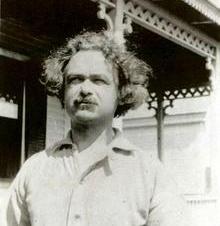
Photos of Voltairine de Cleyre and Hippolyte Havel from Wikicommons

Thursday, May 19, 2011

Lost son: William Gladstone

This is part of an intermittent series on Mary Wollstonecraft's sons and daughters, mostly on Thursdays, unless more pressing and current projects come to light (such as the Stoke Newington Literary Festival) or Blogger decides to take a holiday. Mary has a legacy, and while those who are now alive -- such as Ayaan Hirsi Ali and Amartya Sen -- may be vociferous in their praises, the women (and men) who read the Vindications in the decades after her death were often more muted. Self-censorship is the better part of valour, apparently.

So, today, let us lift the veil on her lost son, William Gladstone, Victorian statesman, who, along with his arch-rival Disraeli, for decades set the tone for the leadership of the British Empire. Gladstone had begun life hoping to become a clergyman, but his father advised him to go into politics, which he did, starting as a High Tory and migrating via the Peelites to head of the Liberal Party. He was a reformer at heart, and fought for the extension of the (male) franchise and the secret ballot  (which he won) and Home Rule for Ireland (which he did not, though he lessened the power of the Anglo-Irish landlords). It was on his watch that the Elementary Education Act was passed, and this is where Mary Wollstonecraft comes into the story. As I said before:
Gladstone repeatedly read and annotated Wollstonecraft while he was planning the structure of the state education system, but probably didn't quote her publicly, as she was persona non grata for a Victorian politician to be hobnobbing with. (I would love to be corrected on this: did Gladstone acknowledge his indebtedness to her in shaping his thoughts?)
This was an allusion to a book I had come across by serendipity last year. Time for a little more detail. Opposite the British Library I found a copy of Gladstone and Women by Anna Isba (2006), with chapters on sisters, daughters, "fallen women" (he was big on those), mother, wife, queen (she was not so keen on him). Isba says, "As on many aspects of women's issues, what Gladstone thought of equal educational opportunities for both sexes is not entirely clear." I think it is fair to consider Mary Wollstonecraft first and foremost an educator, and A Vindication of the Rights of Woman can be read as an educational treatise. We've previously looked at her views on education, detailed in one of its final chapters, in which she argues for creating a national system that would bring both sexes and all classes together, side by side for at least the first few years. I had not known that Gladstone read her magnum opus twice, "once in May 1849 and again in January 1864", adding marginalia. (The Elementary Education Act was passed in 1870, after many years of lobbying, notably from the National Education League, which Joseph Chamberlain and other Dissenters spear-headed. They wanted compulsory education for all children, without religious doctrine, which inevitably the Church of England opposed, via the National Educational Union.)


Now, I don't have access to Gladstone's copy of Vindication -- yet. I have not yet been to Gladstone's Library, formerly known as St Deiniol's, to see it for myself. (Another blogging coincidence: today is their Founder's Day.) I don't know if his copy has been scanned, marginalia and all. What I have to go on is Isba's work. She tells us:
Though he expressed himself uncertain of the merits of "this scheme of educating boys and girls together", Gladstone wrote in the margin that Wollstonecraft's section on co-education "on the whole I think...the best in the book and some hints in it are worth consideration". How much serious consideration he personally gave to questions of equal opportunity of education, let alond co-education, remains unclear.
One part of Gladstone's copy definitely has been scanned: the flyleaf, on which he wrote his thoughts -- sort of a book review or aide memoireA digital version of this page is hosted rather attractively by Gathering the Jewels, "the website for Welsh heritage and culture", a project sponsored by the National Library of Wales. I had found this some months previously, and was sure some expert must have transcribed the inscription, but thought I would try my hand at deciphering his, for the fun of it. I didn't get very far before I decided to call in the hivemind; I set up a simple Google Doc and put the word out on Twitter, and soon enough was joined by a paleographer from deepest France. We had an excellent time on GChat, with me saying things like "it's possible, but the letter after the J seems more rounded and "closed" than a u, doesn't it?" And eventually we got there, mostly. We appear to have been led astray by the devil, however: she said a certain squiggle was "Satan", and I went along with that tempting apple. 

But, of course, Gladstone and Women includes that inscription, and Isba is presumably more familiar with the stateman's squiggles than most pharmacists are with those of their prescribing doctors. She transcribes that dubious word as "nature"; my error seems akin to listening to heavy metal backwards and finding Satan wherever you look for him. (The devil is in the details.) (Sorry, couldn't resist.) Gladstone's summary of A Vindication of the Rights of Woman thus reads:
The intention is good, and it contains many or some good things; but it aims by far too much at effacing in practical life distinctions which God, and nature his instrument, have made indelible.
There's an intriguing bit before that, which I will save for another time. But the point of this post is, the four-times prime minister and four-times chancellor of the exchequer read the work of Mary Wollstonecraft with respectful critical attention. Her thoughts on national education influenced those of William Gladstone, and, from him, the system that came into being shortly afterwards and whose legacy is still with us today.


[Small additions, e.g. glosses, historical context, bad puns, and images, the following day.]

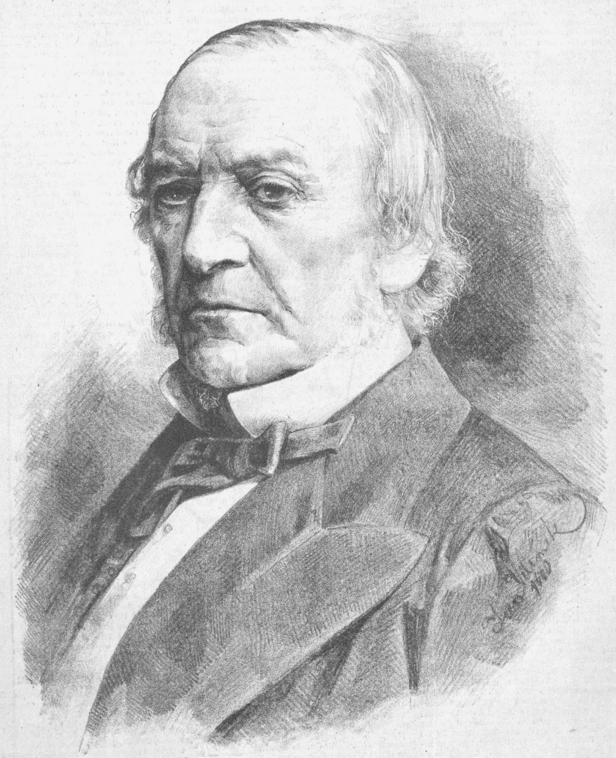
Portrait of Gladstone by Jan VilĂ­mek [Public domain]. The crepuscular glory of Gladstone's Library, by 
David Long [CC-BY-SA-2.0 (www.creativecommons.org/licenses/by-sa/2.0)]. Both images via Wikimedia Commons.

Tuesday, May 10, 2011

Fulltext: the first Vindication

Isn't fulltext a blessing?  What did we ever do before CTRL+F?

Today we feature A Vindication of the Rights of Men, Mary Wollstonecraft's first major success. Edmund Burke attacked her mentor Dr Richard Price and Mary sprung to his defence, writing at white heat and beating Tom Paine into print. (Thanks to Joseph Johnson.) Dr Price had for decades been minister of the chapel at Newington Green, and thus a leader of that Dissenters' village just north of London where Mary set up her boarding school with the help of the widow Burgh. He saw something special in her (as did many) and he fostered it, probably lending money discreetly too. She owed him, and she knew it, and more than that, she loved this old man and his "grey hairs of virtue".
...a member of the community whose talents and modest virtues place him high in the scale of moral excellence. I am not accustomed to look up with vulgar awe, even when mental superiority exalts a man above his fellows; but still the sight of a man whose habits are fixed by piety and reason, and whose virtues are consolidated into goodness, commands my homage .... Tottering on the verge of the grave, that worthy man in his whole life never dreamt of struggling for power or riches.
Some of my contemporaries still seem to think God is an Englishman and Mary Wollstonecraft a Labour voter. I think you'l find it's a bit more complicated than that (with a tip of the hat to Ben Goldacre, or Dr Stats as I call him, who ran a piece on international maternal mortality entitled Mary Wollstonecraft died in childbirth).

Here is the fulltext of A Vindication of the Rights of Men (as in "human beings", in the context of the French Revolution). It is presented in a variety of digital options by the Liberty Fund Library, who, at a guess, are not what you would call democratic socialists. (Do Labour call themselves that any more? Or was that all thrown out with the Clause 4/ Group 4 bathwater?)

Byron said he awoke one morning, famous. (That was for his long poem, Childe Harold.) Much the same happened to Mary, with her first Vindication. It's still worth reading; much has changed; much hasn't. I wonder how many Arabs are reading it this spring?