Showing posts with label philosophy. Show all posts

Thursday, March 7, 2013

A London confab of philosophers

The end of May will see a one-day symposium on The Social and Political Thought of Mary Wollstonecraft, hosted by that very special constituent of the University of London, Birkbeck College, "a world-class research and teaching institution, a vibrant centre of academic excellence and London's only specialist provider of evening higher education". Best of all, the event is freely open to everyone. Thursday 30 May, 9am to 5pm: mark your diaries now. Its description: 
Mary Wollstonecraft is by any accounts a remarkable and versatile thinker. Long appreciated as an inspirational and visionary feminist, she was also a noted historian, travel writer, educator, novelist and activist. Only recently, however, is she being rediscovered as an important and innovative philosopher in her own right, and one who deserves to be studied and understood not only as a product of her time, or through the canon of male writers who influenced her, but firmly on her own terms.
The papers in this symposium explore Wollstonecraft’s ideas both in relation to other female writers of the period and as providing valuable insights into issues of contemporary political relevance such as the nature of rights and the accommodation of cultural diversity.
The event brings together several of the speakers at the 220th anniversary of the publication of A Vindication of the Rights of Woman, including Sandrine Berges, our first guest blogger. Also present a year ago at Mary Wollstonecraft: Philosophy and Enlightenment was Lena Halldenius, its organiser, who very kindly invited me to the official dinner, and Alan Coffee, the London philosopher whose interest in MW is matched only by his interest in Frederick Douglass (and thereby hangs a tale). Martina Reuter was at Lund as well, and Barbara Taylor and I shared the Woman's Hour hotseat two years ago. The speakers:

Sandrine Berges (Bilkent University): Wollstonecraft and Sophie de Grouchy
Alan Coffee (King’s College London): Diversity and the Virtuous Republic
Lena Halldenius (Lund University): Wollstonecraft and Representation
Susan James (Birkbeck College London): Wollstonecraft and Rights
Martina Reuter (Jyvaskyla University): Wollstonecraft’s Critique of Rousseau
Barbara Taylor (Queen Mary): Wollstonecraft and Modern Philosophy

Thursday, January 31, 2013

A new guidebook to the Vindication


Tomorrow marks the publication of the long-awaited Routledge Guidebook to Wollstonecraft's A Vindication of the Rights of Woman, as part of a series of "guides to the great books". This is by philosopher Sandrine Berges, whose work we have looked at before, and who kindly wrote a guest post about how Mary Wollstonecraft came into her life. 
Four years ago, I barely knew who she was. Then a (male) colleague suggested we introduce the two Vindications to our survey course in political philosophy. It was love at first read...
She spoke at the philosophers' confab a year ago, for the 220th anniversary of MW's magnum opus:
Wollstonecraft offers one of the very few existing philosophical discussions of the virtue of chastity... Her account is somewhat complicated by the fact that she explains chastity as a derivative of modesty, not understood as a sexual virtue, but a just understanding of one's own worth.
If I get my hands on a Routledge Guidebook (paperback, £17; hardback, £75; etheric booke, not yet released), I'd be delighted to review it here. In the meantime, we'll have to do with the publisher's description:

Mary Wollstonecraft was one of the greatest philosophers and writers of the Eighteenth century. During her brief career, she wrote novels, treatises, a travel narrative, a history of the French Revolution, a conduct book, and a children's book. Her most celebrated and widely-read work is A Vindication of the Rights of Woman. This Guidebook introduces:
  • Wollstonecraft’s life and the background to A Vindication of the Rights of Woman
  • The ideas and text of A Vindication of the Rights of Woman
  • Wollstonecraft’s enduring influence in philosophy and our contemporary intellectual life
It is ideal for anyone coming to Wollstonecraft’s classic text for the first time and anyone interested in the origins of feminist thought.


Wednesday, August 8, 2012

Action Philosophers

With the permission of the evil twins from Action PhilosophersFred Van Lente for the words and Ryan Dunlavey for the art. Two graciously ink-stained wretches!

Monday, March 26, 2012

Podcast: Rousseau, Macaulay and Wollstonecraft on Negative Education

Last Monday we looked at the first podcast from last month's philosophers' confab on Mary Wollstonecraft. That was Enlightenment Thinker by Karen O'Brien. This week it is the turn of Martina Reuter of Helsinki and Jyväskylä, Finland, speaking on Rousseau, Macaulay and Wollstonecraft on Negative Education.
In her Letters on Education, Catherine Macaulay adapts J.-J. Rousseau’s notion of negative education, emphasizing that the primary task of education is to protect children from harmful impressions. There is a certain tension in Macaulay’s use of the notion. Her belief in the active power of reason is much stronger than Rousseau’s and she does not seem to realize that Rousseau introduced the notion of negative education as an explicit critique of John Locke’s theory of education. In my presentation I will first examine Macaulay’s adaption of negative education and then, in the second part of the paper, I will argue that Mary Wollstonecraft seems to be less influenced by the idea of negative education than Macaulay. I suggest that Wollstonecraft’s slightly lesser worry about harmful impressions does not primarily follow from her belief in reason, which she shares with Macaulay, but rather from her conception of the imagination. According to Wollstonecraft’s notion of creative imagination, the imagination is not merely passively inflamed by impressions, but also able to create impressions and combine reason with passion.

Monday, March 19, 2012

Podcast: Enlightenment thinker

The one-day philosophers' confab in Sweden (which we covered earlier) has released its presentations as podcasts. Here's the first of them; the other four will appear on successive Mondays:
Karen O'Brien, Birmingham.
"Mary Wollstonecraft: Enlightenment thinker"
In this paper O’Brien revisits and, to an extent, revises what she has written before about Wollstonecraft – in Women and Enlightenment in Eighteenth-Century Britain (Cambridge, 2009) – concerning her relationship to Enlightenment thought. O’Brien here specifically picks up on how Wollstonecraft’s fiction, Letters from Sweden and her two Vindications, develop a strand in Enlightenment thinking that is concerned with the insight into human rights (and specifically female rights) that comes from mutual recognition of affect and individual sensibility.
Here is the official site, if you can't wait for more recordings. The audio is clear, but very quiet, though I have set everything I can to maximum. Eleven, even. (Spinal Tap can be an excellent intro to philosophy for some teens: sexism/sexist, inches/feet, perception/reality.)

Wednesday, February 15, 2012

Vindication, from Philosophy Bro

Philosophy is hard - I read and summarize, so you don't have to, man.
So this month we are looking at Mary Wollstonecraft's A Vindication of the Rights of Woman, and how that dense eighteenth century prose - polemic and philosophical - has been adapted to the needs of the readers of today. We looked at resources old and new and squashed. The most irreverent version I've come across is the Philosophy Bro, snugly anonymous (yes, I do mean snugly, as in sitting snugly by the fire)  - "just a bro who likes philosophy" - and takes requests: "Maybe you've got a big paper coming up, and you haven't done the reading. Maybe there's this guy you've heard about, but you don't have the time to wade through the text yourself. Whatever, bro, I don't judge." He also has a clear copying policy, less generous than the Squashed Philosopher, but completely fair, allowing anyone to "excerpt your favorite paragraph or two and link to the rest of it". So that's what I'll do here.

His take on A Vindication starts  
Do you want to know why women fit your stereotypes of stupid, silly creatures? Because they're taught that it's the only way to be. That's what happens when all the bros running education just want pretty idiots to take as mistresses instead of smart ladies to take as wives. Every girl is being taught by these assholes, so if you're frustrated that your wife is like a mistress who spends her time shopping instead of putting out, stop pointing fingers, bro. No wonder she wants nothing more than to shop and drink tea - I don't care how resilient you are, twenty years of being told pretty is the highest value and eventually anyone would start to believe it.
And ends with:
Look, if you want women to stop being weak, stupid complainers who waste money, start educating them. Even I think women are dumb as shit, and I am one. They read bullshit romances and believe in horoscopes and thinks with their hearts instead of their brains. And for thousands of years you've been like, "What's up with dumb bitches?" all while you crank them the fuck out like it's your job. It's time to try something new: teach them reason, and see if they aren't more reasonable. Let them think, and see if they don't. Encourage them to raise their kids and be kind to their servants, and see if they aren't so moody all the time.

In conclusion, it's no fucking wonder bros are awesome; women could be great too, if you would just let them. 
The comments are interesting. "An Art Professor" writes:
I just checked out your tshirts. What is up with the bitches ones? That's never going to be ok. It perpetuates "with humor" the lasting, brutally damaging stereotypes that we still suffer from. Humor about "hoes" and bitches" is one of the most insidious and fucked up things that still lingers.
One response, half a year later:
Dear "Art Professor", it's okay, calm down. You're just "of a different generation", so to speak.
- an anti-kyriarchal (post?)feminist
Another, perhaps the most heartening:
As a bro - and one who read Wollstonecraft - I would like to thank you so much for this piece. I've always believed that real men are Feminists, because strong bro's have nothing to fear from equality, and smart women, confident women are hot!

Monday, February 13, 2012

Vindication, squashed


Mary Wollstonecraft's A Vindication of the Rights of Woman, which turns 220 years old this month, can be tough going if you are not used to eighteenth century prose. Fortunately, it has been interpreted and condensed (and not just my paragraph-long attempt). Last week we looked at a recap of resources and some new ones too. Today, we offer you a version which "reduces the original 85,000 words by nearly 90%, but, as Wollstonecraft is an unusually repetitive writer, no great amount of her sense has been lost." It promises to deliver in 50 minutes.

It's the most radical shrinking I've yet presented (though stay tuned for next time). Squashed Philosophers exists to condense " ...the big books, the ones which defined the way The West thinks now, in their original words, neatly abridged down into little afternoons reads." It is all the work of one man, on such a shoestring he doesn't even have a domain name. Three cheers for Glyn Hughes of Lancashire, and here's to the power of the amateur! I love his generous and clear copyright waiver, "so that anyone anywhere (who hasn't been told not to) may reproduce these pages for any non-commercial purpose". I like the way he invites readers to get in touch: "Complaints are especially welcome." Worryingly, weirdly, he claims his website "has repeatedly been subject to serious, targeted, cyber attack. Are mad fundamentalists or wicked States attempting to destroy this grand disseminator of truth and enquiry? Or just geeks with too much spare time?"

So here is the task he has set himself:
For more than a decade Squashed Philosophers has been here to provide a way of making some sort of sense of the writings of The Western Philosophers. It lets you get to grips with a great idea in an hour or so, whether that's to prepare yourself for something bigger, or just for the joy of discovery. These versions are not complete and they're not perfect, but they do let you do something the originals can't - get for yourself a sort of grand overview of the whole universe of ideas, without having to just take other people's word for it. You'll love them.
He starts with a biography, to put her magnum opus in context:
At the heart of Mary Wollstonecraft's Vindication of the Rights of Women, are the twin virtues of freedom of thought and devotion to family. Few people have so well combined the two as Mary herself, the presiding matriarch of one of the most remarkable families of free-thinkers the West has ever seen. A self-taught London teacher, Mary and her sister Eliza became convinced that the girls they attempted to enlighten were already enslaved by a social training that subordinated them to men....  Mary Wollstonecraft may be the "mother of feminism", yet, for all that she was called a "hyena in petticoats", by today's standards she seems somewhat prudish and more than modest in her aims. She does not lay any claim to equal opportunity for women, but rather allows for the sort of variation in the roles of the sexes which her sucessors might now call 'difference feminism'.
It promises to deliver in 50 minutes. "This condensed edition reduces the original 85,000 words by nearly 90%, but, as Wollstonecraft is an unusually repetitive writer, no great amount of her sense has been lost." However, if you don't have time for almost 10, 000 words, try this distillation:
No Time? Read THE VERY, VERY SQUASHED VERSION...

Mary Wollstonecraft, 1792
A Vindication of the Rights of Women
"I do not wish them to have power over men;
but over themselves."
I have a profound conviction that women are rendered weak and wretched, especially by a false system of education, gathered from books written by men who have been more anxious to make of women alluring mistresses than rational wives. The DIVINE RIGHT of husbands, like the divine right of kings, may, it is to be hoped, in this enlightened age, be contested without danger. Men, in their youth, are prepared for professions, but women can only look to marriage to sharpen their faculties. Yet, novels, music, poetry and gallantry all tend to make women creatures of sensation. 
"Educate women like men," says Rousseau, "and the less power will they have over us." This is my point. I do not wish them to have power over men; but over themselves. Rousseau holds that women ought to be weak and passive. Dr. Fordyce and Dr. Gregory's advice to women are full of old prejudices. Modesty is a great virtue, O my sisters, but modesty is incompatible with ignorance and vanity! 
Though I consider that women in the common walks of life are called to be wives and mothers, I lament that women of a superior cast have no way to pursue usefulness and independence. I really think that women ought to have representatives, instead of being arbitrarily governed without any share in the deliberations of government. Taxes on the very necessaries of life support an endless tribe of idle princes. Women might study medicine, politics and business. Women would not then marry for a support. 
Parental affection is often but a pretext to tyrannize. Children cannot be taught too early to submit to reason; but it is unreasoned parental authority that first injures the mind. I think that schools are now hot-beds of vice and folly. Day schools should be established by government, in which boys and girls might be educated together. Humanity to animals should be particularly inculcated. 
Belief in horoscopes is one of the worst affectations of women. Stupid, sentimental novels are another, as is an immoderate savage-like fondness for dress, for pleasure and sway. The majority of mothers leave their children entirely to the care of servants: or treat them as if they were demi-gods, yet such women seldom show common humanity to servants. Let woman share the rights, and she will emulate the virtues of man.

Wednesday, February 8, 2012

Vindication: new resources

If I estimate that perhaps one in a hundred Britons could tell you who Mary Wollstonecraft is, not one in a hundred of those cognoscenti would know that the Vindication that she is remembered for was her second. Fourteen months before, she had published A Vindication of the Rights of Men, a response to Edmund Burke's essay attacking her mentor Richard Price, the minister to the Dissenters of Newington Green. It was that book that made her an intellectual celebrity, placing her name firmly on the map of lettered London, and hence A Vindication of the Rights of Woman, published exactly 220 years ago, was received with interest and widely read; even if many disagreed with its conclusions, they paid the book and its author the respect of engaging with the arguments.

Now for some resources not covered in our recent recap: Taking Liberties, "the 900-year struggle for Britain's freedoms and rights in key documents", was the winter 2008/09 temporary exhibition at the British Library. It situates the Vindication in what it calls the human rights group, stretching back to 1690 Locke's Treatises, via the Minutes of the Committee for Effecting the Abolition of Slavery (1787),  and forward to the 1948 UN Declaration of Human Rights (an obvious choice) and, its last entry, the 1957 Wolfenden Report (a braver choice). The exhibition website (as good in its way as the one of Shelley's Ghost) describes the Vindication thus: "The firmly-argued book, written in the tumultuous period following the French Revolution, was one of the first great works of female emancipation - but the goals she advocated took many decades to attain."

A Vindication draws on the parallels between women's position and that of slaves. It is worth mentioning the environment in which the author developed these ideas. The 1787 committee had a dozen members, all men: nine Quakers and three Anglicans, including William Wilberforce. A non-denominational (or multi-denominational) pressure group was thought to be more effective than one composed exclusively of those outside the establishment: Quakers could not stand for Parliament, and suffered other civil disabilities. It is only fair to remember, however, that abolitionism began with the Society of Friends - a lesser known committee, entirely of Quakers, preceded this famous one by three years. Not surprisingly, some of its members, such as Joseph Woods senior and Samuel Hoare junior, lived at Stoke Newington, a village popular with that sect and due north of the City of London, an easy journey for merchants who wanted the benefit of fresh country air for their growing families. It also happens to be the neighbouring village to Newington Green. This was the environment in which Mary was radicalised; from her childhood she knew that the world could be a harsh and unjust place, but there she learned to see its injustices through political eyes.

One final resource: the avid readers at A Year of Feminist Classics devoted January 2011 to reading A Vindication, and their comments are preserved. Their year proved so productive that they are continuing into 2013, according to the reading list.

Coming up are some interpretations -- or, you could say, translations -- of A Vindication of the Rights of Woman.

Monday, January 30, 2012

Swedish conference programme

On the 23 February 1792 Mary Wollstonecraft published a book that has become a milestone in the history of political philosophy and one of the founding texts of feminist political thought, A Vindication of the Rights of Woman. On this the 220th anniversary of the birth of the Vindication we welcome all to a symposium dedicated to the philosophy and intellectual context of this remarkable thinker.
-- From the official conference website, for Mary Wollstonecraft: Philosophy and Enlightenment.  

I found out about this philosophers' confab in September, and now its organiser, Lena Halldenius, has written with more information on the proceedings. She also expresses no amazement that I will be, instead, at the other academic conference commemorating the publication of A Vindication of the Rights of Woman, though honestly that decision had much less to do with the weather (I love proper snow!) and much more to do with networking for Mary on the Green, the project to raise a memorial sculpture. We'll have more on Mary Wollstonecraft: Legacies, and Gainsville FL, in another post soon.

As for the Lund symposium, there is full info at PhilEvents, a website compiling events in philosophy, brought to you by the Institute of Philosophy, at the University of London. The symposium has a Facebook event page, and though its organiser professes technological modesty (a repeating virtue, see below), there are high hopes of the talks being podcast. Watch this space! Would anybody attending like to tweet the day as it goes along?

Four of the five speakers have already provided their philosophical abstracts. There is Martina Reuter, of Helsinki and Jyväskylä, on "Rousseau, Macaulay and Wollstonecraft on Negative Education", and Alan Coffee, of Birkbeck, on "Freedom as Independence: Mary Wollstonecraft and the Grand Blessing of Life". I am particularly curious about the paper by Lena Halldenius herself, on "Drawing from the Original Source. Wollstonecraft on Morality and Nature":
My aim here is to analyze what acting morally means and requires in Wollstonecraft’s thought. This is usefully done partly by identifying what it is that makes moral agency so difficult. I argue that there are three components to Wollstonecraft’s theory of moral agency: an internal intellectual struggle, acting on a universal motive, and the activity of freely disposing of one’s person. The sometimes overwhelming difficulty of acting on the duty to be moral – despite a person’s very best intentions – makes up the stuff of Wollstonecraft’s novels. I will use her novels here to investigate how she lets ‘nature’ and its counterpoint ‘artifice’ serve to show of what this difficulty is made.
"The sometimes overwhelming difficulty of acting on the duty to be moral – despite a person’s very best intentions": yup, I can relate.

I am also interested in "Wollstonecraft on the Virtue of Chastity", as discussed by Sandrine Berges, who has been kind enough to write for this blog, and who I'll be sorry to miss.  Mary and the Slutwalk and Mary, molls, and modesty looked at the under-read chapter of A Vindication of the Rights of Woman that begins with a paean to that virtue:
MODESTY! Sacred offspring of sensibility and reason!—true delicacy of mind!—may I unblamed presume to investigate thy nature, and trace to its covert the mild charm, that mellowing each harsh feature of a character, renders what would otherwise only inspire cold admiration—lovely!
The Bilkent philosopher doesn't write like that.
In the Vindication of the Rights of Women, Wollstonecraft offers one of the very few existing philosophical discussions of the virtue of chastity.  I argue that her account is Aristotelian, focusing as it does on the idea that chastity is a firm character trait rather than a natural disposition, and that it is a mean between a vice of excess and one of deficiency. Her account is somewhat complicated by the fact that she explains chastity as a derivative of modesty, not understood as a sexual virtue, but a just understanding of one's own worth. In that sense her account is very close to an account of modesty offered by Irene McMullin in her 2010 paper. The linking of modesty and chastity enables Wollstonecraft to give an account of chastity different from those of her predecessors, such that a feminist would be comfortable accepting it, but it also raises some potential worries about whether concerns of chastity place an unreasonable burden on women. I will argue that responding to these worries by further developing the account in fact gives us some of the tools we need to combat oppressive prejudices and related practices traditionally born of concerns for chastity.
 [Addendum: the conference now has a poster to download.]

Sunday, December 25, 2011

Life grows more animated

Recently I was able to share with you the two-minute animation of Mary Wollstonecraft's life that begins the Dutch humanist TV programme on her philosophy and legacy. Only this brief clip was available, because Blogger restricts video uploads to YouTube, and YourTube restricts uploads to 15 minutes - or so we thought. Twitter sprang to the rescue with a work-around, and now the whole thing can be viewed here:


I am delighted to report that Dutch humanists are so egalitarian that they do not fob off the petty tasks by job rank. Instead, I have it on excellent authority that the head of the whole "Dare to Think" endeavour,  Eveline van Dijck, took upon herself the tedium of uploading the episode to YouTube. So yes, dear reader, the entire half hour of Mary Wollstonecraft can now be seen on the web's favourite video-sharing site: the charming animated biography, my Twitter conversation with Leon Heuts the philosopher-journalist, the animated-in-the-other-sense studio discussion, the day-in-the-life-of  two contemporary feminists,  Marieke Bax, a high-powered executive in a chauffeured car,  and Maruja Remijn Bobo, a gender studies lecturer on a classic bicycle with toddler accessories.  

The video is also available on Vimeo, where I can see captions (kindly explained in Marjorie's comments on my blogpost). And in case you'd forgotten, we've tracked the progress of this project from April's first contact to June's Twitter conversation, from September's press release to October's broadcast, from November's partial translation to December's partial animation. So count today's post, and the successful upload, as a winter solstice present to us all.

Tuesday, December 13, 2011

Life grows animated


Hurray! Here at last is the charming animated biography, just a couple of minutes long, prepared by the Humanist TV station for their episode on Mary Wollstonecraft, part of a series of twelve great philosophers from Socrates to Sartre. An unofficial translation is available, but trust me, you don't need any Dutch to understand and enjoy the whiz through Our Lady's life from abusive childhood to literary triumph, from Newington Green to Paris and always back to London. All the crucial names are there: Fanny Blood, Joseph Johnson, Jean-Jacques Rousseau, Gilbert Imlay, William Godwin, Mary Shelley, Frankenstein.

(Blogstuff: I mentioned that the episode was available on Vimeo, but as Blogger only allows YouTube videos -- not even uploads from one's own computer -- I thought I would not be able to provide the clip. Trusty researcher Josephine Krikke came to the rescue, emailing me the link to the YouTube version. So far only this short segment of the broadcast is on YT, but if the production team does decide to put the whole episode there, I'll be happy to host it here, and hope to pull in a few more viewers to their excellent project. If TV in your country isn't doing thought-provoking programmes like this, ask the powers that be why not.)

Saturday, November 12, 2011

It's all Dutch to me

This was kindly sent to me by Josephine Krikke, the researcher on the Dutch Humanist TV programme about Mary Wollstonecraft, her philosophy, life, and effect on our times. The half-hour episode aired in the Netherlands two weeks ago, which I wrote about then, and is available on Vimeo. This text is their translation of the animation, which takes up the first couple of minutes of the programme in telling Mary's life quite charmingly. It is easy enough to understand, even without these English words. 
Mary Wollstonecraft’s A Vindication of the Rights of Woman is one of the first feminist publications. In her time, females were mainly seen as a possession, but Wollstonecraft claimed that they had the same rights as males. She wrote much more than this, novels and travel journals, for example. She was one of the first women who could earn her living from writing. She called herself "the first of a new genus". 

Wollstonecraft has a difficult childhood. Her family relocates often because her father gets into debt. In addition, he beats his wife. Mary (Wollstonecraft) often lies in front of her mother’s bedroom door, in order to protect her. At age 18, she leaves home. 

With her best friend, Fanny Blood, Wollstonecraft sets up a school in Newington Green but Blood passes away not long after. Wollstonecraft leaves the school and settles in London. Here she can often be found at the publishing house of Joseph Johnson, where she meets progressive intellectuals, such as Thomas Paine and her future husband, William Godwin. She learns French and German, translates texts and starts to publish her own works. 

The French Revolution touches the hearts of progressive intellectuals. Wollstonecraft receives praise for her A Vindication of the Rights of Man, wherein she defends the principles of the revolution – the freedom and equality of every human being. But especially, the later published A Vindication of the Rights of Woman is still well known today. 

In this, Wollstonecraft claims that the ideas of the revolution are also applicable for females. The male revolutionaries had not stopped to think about this. Even the revolutionary philosophers such as Jean-Jacques Rousseau wrote that education for females was not necessary, because they are superficial and weak. Nonsense, says Wollstonecraft. It is exactly because of the lack of education that females are superficial. Girls are taught to behave themselves like obedient dogs, like spaniels. 

Wollstonecraft leaves for post-revolution France and begins a fateful relationship with the American adventurer, Gilbert Imlay. After the birth of their child, Fanny, he leaves her. Once back in London, Wollstonecraft tries to end her own life by jumping in the Thames, but a passerby rescues her. 

Later she marries the renowned liberal philosopher, William Godwin. She passes away during the birth of their second child, Mary. Godwin writes to a friend that he is certain he shall never again know happiness. Daughter Mary later marries English poet, Percy Shelly; at age 19 she writes Frankenstein.

Saturday, October 29, 2011

Dutch Humanist TV

The day has finally arrived! Mary Wollstonecraft is getting an hour half an hour on national TV. OK, not my nation (or Mary's), but you've got to admit it is a commendable country that supports a whole network (TV, radio, website) with the slogan "Dare to think". What nation? The Netherlands. The Humanist Network has produced a dozen hour-long programmes, each about a different philosopher, and Mary Wollstonecraft is one of them. Their researcher Josephine Krikke approached me in April, and philosopher-journalist Leon Heuts interviewed me in June on Twitter, and gradually the production progressed. Today is the day! But fear not, if you are distant by time or geography. Here it is on Vimeo, the non-YouTube video host. (Am I capable of embedding it, or a clip, on this blog...hmm...another stretch for my blogging skills. Another day.) 


The programme page on their website is a neat summary. Josephine has just told me about another page, which (via Google Translate) appears to be a longer summary, or possibly a transcript, of the section involving this blog and our UK activities. Here's a flavour of it, with a bit of tidying up and creative editing and reverse translation, to produce something readable:

Women do not need power over men, but over themselves. Thus said Mary Wollstonecraft, one of the first feminists, who lived in the eighteenth century. In the eighth episode of Dare to Think this meaning is central....
The Canadian-British former university professor Roberta Wedge was impressed by the ideas of Mary Wollstonecraft. She even has a Twitter account that she uses as if she were Mary. ... In her hometown of London, where Wollstonecraft was born, Wedge's fascination with this woman was fueled. "I'm irreligious, but one day I decided to visit a church, where they announced that they would be celebrating the 250th birthday of Mary Wollstonecraft. This was the only organized public activity in the world surrounding this event." Wedge realized that how much Wollstonecraft has meant for the emancipation of women (and men). She was surprised that the woman still aroused such little interest.... 
She is also on a committee fighting for a statue of Wollstonecraft. She wrote to all the members of the British Parliament and on November 16 launches a campaign to make this dream into reality. "Mary deserves it. She was not only a champion of women's rights, but of human rights in general and the republican philosophy."
... according to Wedge there are issues that Wollstonecraft raised that are relevant in our time. "There are still women who believe that a marriage with a man means access to a new and better life, the ideal end point for the woman. Think of countries where not all the girls go to school. There is no reason for them to study, says the general opinion, as they will just disappear into motherhood. It was Wollstonecraft who was one of the first to dare to raise these issues."
I don't remember saying all that, but it seems likely enough. We did have a very long conversation back in the spring, and I am sure Josephine was taking much better notes than I was. And it makes it sound as if I am launching the campaign all by myself - far from the case. There is lots more about about Mary on the Green if you are interested. Yes, there's going to be a splash on November 16, but no abseiling lesbians.


One of the people behind this project is Dorothée Forma, who made an hour-long radio documentary about Mary in 1989 (more info). I've not had any direct contact with her, but I bet she is an intriguing woman too.

[PS And the presenter is Farid Tabarki. He interviews Leon Heuts, and facilitates the discussion with the studio audience.]

Tuesday, October 4, 2011

A book to save up for

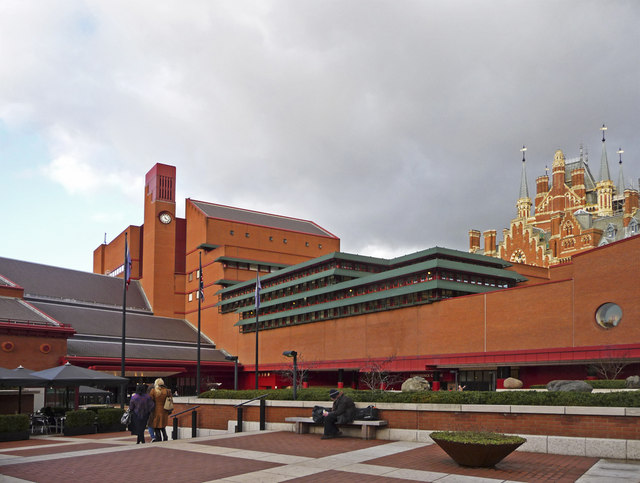
British Library, by Christine Matthews
You just know that with a series title such as International Library of Essays in the History of Social and Political Thought, the forthcoming tome on Mary Wollstonecraft is not going to be something to read in the bath.  Working 27.5 hours at current UK adult minimum wage will get you 588 pages of hardback quality. You have until April to save up that £160, or to persuade your favourite library to acquire a copy upon publication. It sounds fantastic, though:
The essays in this collection represent the explosion of scholarly interest since the 1960s in the pioneering feminist, philosopher, novelist, and political theorist, Mary Wollstonecraft. This interdisciplinary selection, which is organized by theme and genre, demonstrates Wollstonecraft's importance in contemporary social, political and sexual theory and in Romantic studies.
It goes all the way back to the beginning, and I hope it will set to rest for once and for all the misconception that both author and magnum opus  were shunned on its publication:
The book examines the reception of Wollstonecraft's Vindication of the Rights of Woman but it also deals with the full range of her work from travel writing, education, religion and conduct literature to her novels, letters and literary reviews.
Most of the content, or possibly all of it, is reprints. Some of the essays go back over a century; some are much more recent: 
As well as reproducing the most important modern Wollstonecraft scholarship the collection tracks the development of the author's reputation from the nineteenth century. The essays reprinted here (from early appreciations by George Eliot, Emma Goldman and Virginia Woolf to the work of twenty-first century scholars) include many of the most influential accounts of Wollstonecraft's remarkable contribution to the development of modern political and social thought. The book is essential reading for students of Wollstonecraft and late eighteenth-century women's writing, history, and politics. 
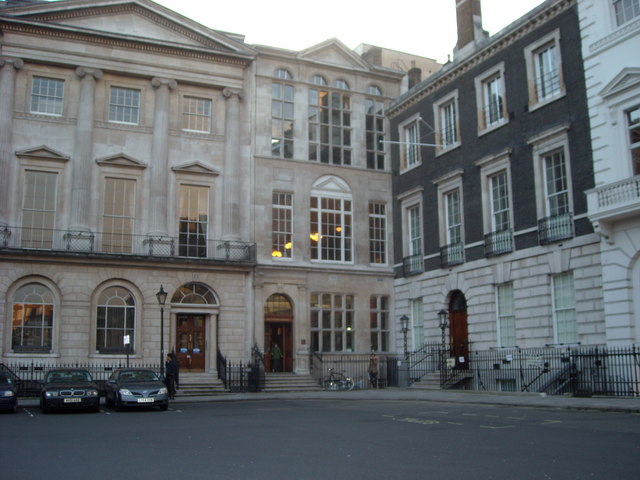
London Library, by Bill Johnson 
It is from Ashgate, which I hadn't heard of before. Others in the International Library of Essays include Tom Paine, Jeremy Bentham, Rousseau, Aristotle, Hannah Arendt, Edmund Burke, and many others. This volume has been edited by Jane Moore, from Cardiff University, a reader in the School of English, Communication and Philosophy -- NB not history.  She wrote a rather more slender book on MW in 1999, at the request of the British Council, part of "a series of innovative critical studies introducing writers and their contexts to a wide range of readers".


What tense should we use for the forthcoming heavy-weight volume: has been edited? Is being? It can't take another six months to print and distribute a book, even if the physical presses are in deepest China. It's funny, isn't it: despite the rush-rush of modern life, so commented upon, some things were much quicker in Mary's day, particularly in the publishing business. Lyndall Gordon says A Vindication of the Rights of Men is "no hasty pamphlet" (chapter 7 of her biography Vindication), but from Mary's letters we know that as she was writing her books, the printer's devil was knocking on the door, wanting to take the manuscript pages to Joseph Johnson for typesetting. No luxury of writing an entire draft, and going back over it before the publisher saw it: rush-rush indeed.


And just look at the contents! This is only partial, but my goodness, am I partial. Random good bits in bold.


Part I Survey of the Work and Reputation:
  • Margaret Fuller and Mary Wollstonecraft, George Eliot; 
  • Mary Wollstonecraft: her tragic life and her passionate struggle for freedom, Emma Goldman
  • Mary Wollstonecraft, Virginia Woolf
  • Feminist studies and the discipline: a study of Mary Wollstonecraft, Virginia Sapiro; 
  • On the reception of Mary Wollstonecraft's A Vindication of the Rights of Woman, R.M. Janes; 
  • Mary Wollstonecraft: texts and contexts, Gary Kelly; 
  • Remembering Mary Wollstonecraft on the bicentenary of the publication of a Vindication of the Rights of Woman, Sylvana Tomaselli. 

Part II Contexts: History, Politics, Culture: Wollstonecraft and Social, Philosophical and Political Theory: 

  • Mary Wollstonecraft: 18th-century commonwealthwoman, G.J. Barker-Benfield; 
  • Wollstonecraft, feminism, and democracy: 'being Bastilled', Virginia Sapiro; 
  • Mary Wollstonecraft and the 'reserve of reason', Simon Swift; 
Wollstonecraft, Gender and Enlightenment: 
  • The Enlightenment debate on women, Sylvana Tomaselli; 
  • Mary Wollstonecraft and Enlightenment desire, Janet Todd; 
  • Wollstonecraft, Education and Conduct Literature: Her demands for the education of woman, Emma Rauschenbush-Clough; 
  • Mary, Mary, quite contrary, or, Mary Astell and Mary Wollstonecraft compared, Regina Janes; 
  • Advice and enlightenment: Mary Wollstonecraft and sex education, Vivien Jones; 
Wollstonecraft and the French Revolution/Wollstonecraft's Historical and Moral View of the French Revolution: 
  • 'The grand causes which combine to carry mankind forward': Wollstonecraft, history and revolution, Jane Rendall; 
  • Gender in revolution: Edmund Burke and Mary Wollstonecraft, Tom Furniss; 
Wollstonecraft and Religion: 
  • For the love of God: religion and the erotic imagination in Wollstonecraft's feminism, Barbara Taylor
  • Sibylline apocalyptics: Mary Wollstonecraft's Vindication of the Rights of Woman and Job's mother's womb, Mary Wilson Carpenter; 
Wollstonecraft and Romanticism: 
  • Death in the face of nature, self, society and body in Wollstonecraft's Letters Written in Sweden, Norway and Denmark, John Whale; 
  • Godwin's Memoirs of Wollstonecraft: the shaping of self and subject, Mitzi Myers; 
  • 'No equal mind': Mary Wollstonecraft and the young Romantics, Harriet Jump;
Wollstonecraft, Femininity/Sexuality/Feminism: 
  • Mary Wollstonecraft and the wild wish of early feminism, Barbara Taylor; 
  • Wild nights: pleasure/sexuality/feminism, Cora Kaplan; 
  • (Female) philosophy in the bedroom: Mary Wollstonecraft and female sexuality, Gary Kelly; 
  • Wollstonecraft, Slavery and the Orient: Mary Wollstonecraft and the problematic of slavery, Moira Ferguson; 
  • Wollstonecraft's Death: The death of Mary Wollstonecraft, Vivien Jones. 
Part III Texts, Novels, Literary Reviews, Letters: 

Wollstonecraft's Literary reviews:
  • Mary Wollstonecraft's contributions to analytical review, Sally N. Stewart; 
Wollstonecraft's Fictions – Mary, A Fiction and The Wrongs of Woman: or Maria, a Fragment: 
  • Mary Wollstonecraft: the gender of genres in late 18th-century England, Mary Poovey;
  • Wollstonecraft and Godwin: reading the secrets of the political novel, Tilottama Rajan;
Wollstonecraft's Letters: 
  • Letters Written…in Sweden: toward Romantic autobiography, Mitzi Myers; 
  • Mary Wollstonecraft's letters, Janet Todd
Note the lacunae: no Lyndall Gordon, no treasure ship, no modern philosophers, no Claire Tomalin, no suffragettes, no charting of the C19 rehabilitation (no Elizabeth Robins Pennell, who I'm rather fond of). But still...


Somehow I have to get my hands on a copy.


Images from Wikimedia Commons.


Thursday, September 29, 2011

Dutch TV edges closer

Some time ago I wrote of the Dutch Humanist TV station and its upcoming 12-part series on philosophers, of which Mary Wollstonecraft will get one hour-long episiode. (I like their graphic for the series, to the left.) I was interviewed via Twitter in June, which I reported at the time. I have heard from the production team again, and the broadcast will be a month today, 29 October. 


The researcher has assured me that the episode will be uploaded to Vimeo, for those out of reach of the Netherlands. Of course, it will be in Dutch, which is a bit of a hindrance for some of us. Fortunately, written text can be spun through Google Translate, followed by a quick clean-up. Herewith some of the press release.
Guests in this broadcast are Leon Heuts, philosopher, editor of Philosophy Magazine and fan of Mary Wollstonecraft. He holds a Twitter session with another fan: Roberta Wedge from London. On her blog Wedge researches everything to do with Wollstonecraft. She has a Twitter account as Mary.  
How can women combine passion with a career? Dorothée Forma [award-winning documentary maker] and Maruja Remijn Bobo, gender studies professor at the University of Amsterdam, follow Marieke Bax, businesswoman and founder of Talent to the Top, the initiative for more women to the top.  
Maruja Remijn Bobo: "On the one hand, Mary Wollstonecraft is a very interesting philosopher; on the other hand, she is a very passionate human being who travelled and loved. She was a very contemporary, modern, self-made woman."

Here's the Dutch Humanist TV take on Mary's life. NB the attention given to her marriage with dearest Wm:
Mary Wollstonecraft wrote A Vindication of the Rights of Womanone of the first feminist works. In her time, women were primarily seen as propertybut Wollstonecraft claims that they have the same rights as menShe writes a lot, novels and travel essays. She is one of the first women to live by the penShe calls herself "the first of a new genus".

In 1792 Wollstonecraft departs for Paris to see the French Revolution at first hand. She meets the American Gilbert Imlaywith whom she has a daughterAfter a painful break with Imlay and a failed suicide attempt, she becomes friends with the radical philosopher William Godwin, who rejects marriage and romanceNevertheless they marry, emphasizing that their marriage is no concession to the prevailing morality, but they are completely equal partnersMary Wollstonecraft died on September 10, 179711 days after the birth of her daughter Mary.

Tuesday, September 27, 2011

Philosophers' confab


Lund University main building. By Magnus Bäck
[Public domain], via Wikimedia Commons
Finally, Mary Wollstonecraft is getting proper attention as a philosopher. A Swedish research programme called Understanding Agency: Conceptions of Action, Human Nature and Value in the Western Philosophic Tradition is one of the organisations giving her a full day:
On 23 February, 2012, there will be a one day symposium on the philosophy of Mary Wollstonecraft, Enlightenment thinker and feminist pioneer. The symposium takes place in Lund and is organized jointly by Understanding Agency and the Philosophical Psychology, Morality and Politics Research Unit at the Universities of Helsinki and Jyväskylä.
Regular readers of this blog will not be surprised to hear that Sandrine Berges (who is a serious academic force to contend with, and in her spare time also grapples with the Undead), is addressing this all-day argument of philosophers. Earlier this year, she spoke at Man and Nature from Descartes to Wollstonecraft, though that was in Istanbul, much closer to home at Bilkent.

There is no doubt that Mary Wollstonecraft's most famous book is A Vindication of the Rights of Woman, and her "re-discovery"* over the last half-century has been led by the scholars of women's history, a field of study for too long forgotten and suppressed. However, one of the purposes of this blog is to remind the world that Mary does not speak solely to women, or to feminists. She speaks to democrats, Romantics, educationalists, and many other groups. It is good to see philosophers getting their teeth into her, zombies or not.

More info on the academic confab here. (What is the difference between a conference and a symposium, anyway?) [Addendum: the post-conference page is here, with podcasts.]

-------------------------------------------------------------------------------------------------------------------------
*In scare quotes, because she was never forgotten: not immediately following her death, not in the aftermath of the French Revolution, not in the long decades leading up to an organised suffrage movement, not once women won the right to education and later the right to vote in one jurisdiction after another, not in the growing prosperity of the C20. 

Friday, July 8, 2011

Mary and the USA

By DevinCook [Public domain],
 via Wikimedia Commons
[This was posted a few days ago, to begin the week with a focus on the United States. Somehow it disappeared. Probably my fault; grr, blogstuff.]

Of all the countries that Mary Wollstonecraft never travelled to, the United States was the closest to her. She was shaped by her multiple abodes around England, and she was formed by teaching in Ireland, observing in Portugal, writing in France, and travelling through Scandinavia. But the United States, and especially its frontier, represented the hope of a better world, literally the re-making of human nature.

Lyndall Gordon, in an essay on MW's America, says:

Mary Wollstonecraft never came to America, but she did imagine it in the 1780s and 1790s, and did plan to emigrate with her American partner, Gilbert Imlay. They intended to farm on the frontier, and she would have done so had not Imlay withdrawn. Her youngest brother, Charles Wollstonecraft, had already settled in the territory of Ohio, and Mary had sold family property to buy land there. She wished to join him, and to bring along her two sisters, Eliza and Everina. 
She had met Imlay with a prepared mind, a pro-American ideology. ... the prime importance of America for Wollstonecraft was not personal but political, and preceded her attachment to Imlay by nearly ten years.
This is because, Gordon posits, MW's interest in the USA dates back to her early days as a schoolmistress at Newington Green, hanging out with Unitarians and radical political thinkers. She reminds us that Rev Dr Richard price, minister of that congregation, considered the American Revolution "the fairest experiment ever tried in human affairs."

This week, given the season, we will celebrate Mary's connection to the still nascent nation.

Wednesday, June 29, 2011

Man and Nature from Descartes to Wollstonecraft

Even now, on the European side of Istanbul, an argument of philosophers (I believe that is the correct group noun) is gathering for a few days. Man and Nature from Descartes to Wollstonecraft: does that count as the most meta title of the year? 
The theme of the conference centers on the place of human beings in the natural world in the 17th and 18th centuries. Papers focusing on human nature or on the place of human being in the natural order, both from historical  and contemporary perspectives are welcome. Although we chose the title ‘Man and Nature’ deliberately in order to reflect the common usage of the term ‘Man’ to refer to human beings in general in the early modern period, papers that question this gendered understanding of human nature will be of particular interest.
The conference is being held at Bogazici University, an institution with roots in the American higher education system 150 years ago.  Its host is Lucas Thorpe, who specialises in early modern philosophy, especially Kant. (He read PPE at Wadham, before international academic adventures.)  Philosophers are coming from France, Lebanon, Canadaand even countries beyond the Francosphere. No prizes for guessing the counter-balancing anglophone triumvirate.

The culmination of the conference must be its final speaker: none other than our old friend Sandrine Berges, on "Wollstonecraft on Women as Citizens and Mothers: Putting Nature Back in its Place". (This spring, she has been writing more informally on Vitae about various life stuff, including  "Playing at being a historian"  -- what I call  "I am not a historian", IANAH, in respect of my freelance research.) And immediately before her on Saturday afternoon is Natalie Nenadic from Kentucky, on "Rousseau, Wollstonecraft, and Human Nature". I wish I could be there! 

But I can console myself with having discovered a philosophical examination of Mary Wollstonecraft, a book dating from the end of the C19. Even more surprising, and satisfying, is that  "class" and "diversity" feature as items in its index. More on the Indian missionary another time.

Time for bed: in a few short hours I will be meeting a special someone at Mary's graveside. I still get a kick out of saying "Meet me in the cemetery."