Showing posts with label travel. Show all posts

Friday, September 23, 2011

Heroine of the high seas

Battery at Holmen, Risør -1814
In early summer I had the repeated pleasure of meeting Bee Rowlatt, who calls herself a "proper Wollstonecraft geek", and I wrote briefly of  her Scandinavian pilgrimage with baby under one arm and book proposal under the other. Remember the episode in Mary's life, when she returns to London from revolutionary France, babe in arms, to find the faithless Imlay shacked up with an actress? The American adventurer rescued her from a suicidal overdose of despair. She said, "What can I do to prove my devotion?" He said, "Well, there's this ship of mine that's gone missing, full of silver from French aristos who were liquidating their assets to stay a step ahead of the guillotine. Why don't you have a look for it? Last spotted in a Hanseatic port." (I paraphrase.) 


Bee's evocative and lively travel piece has finally appeared in The Telegraph:
Wollstonecraft Letters map. Kmusser [CC-BY-SA-3.0]
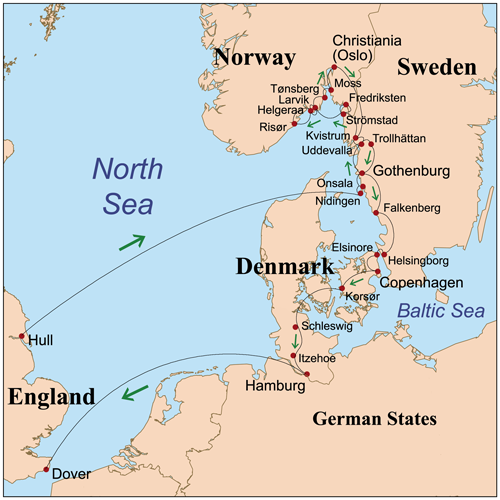
She is a broken-hearted treasure-hunting single mum philosopher on the high seas, and I think I am a bit in love with her. So I am retracing her steps, on the part of her journey where she pursues a notorious Norwegian captain down the rocky coastline of the Skagerrak. Wollstonecraft undertook the voyage with her baby and a trusty maid. I am bringing my baby and a large rucksack but alas, no maid.
(I did offer my services, Bee, even before meeting your baby, and having done so, would gladly offer again.) Mother and infant journey from port to port:
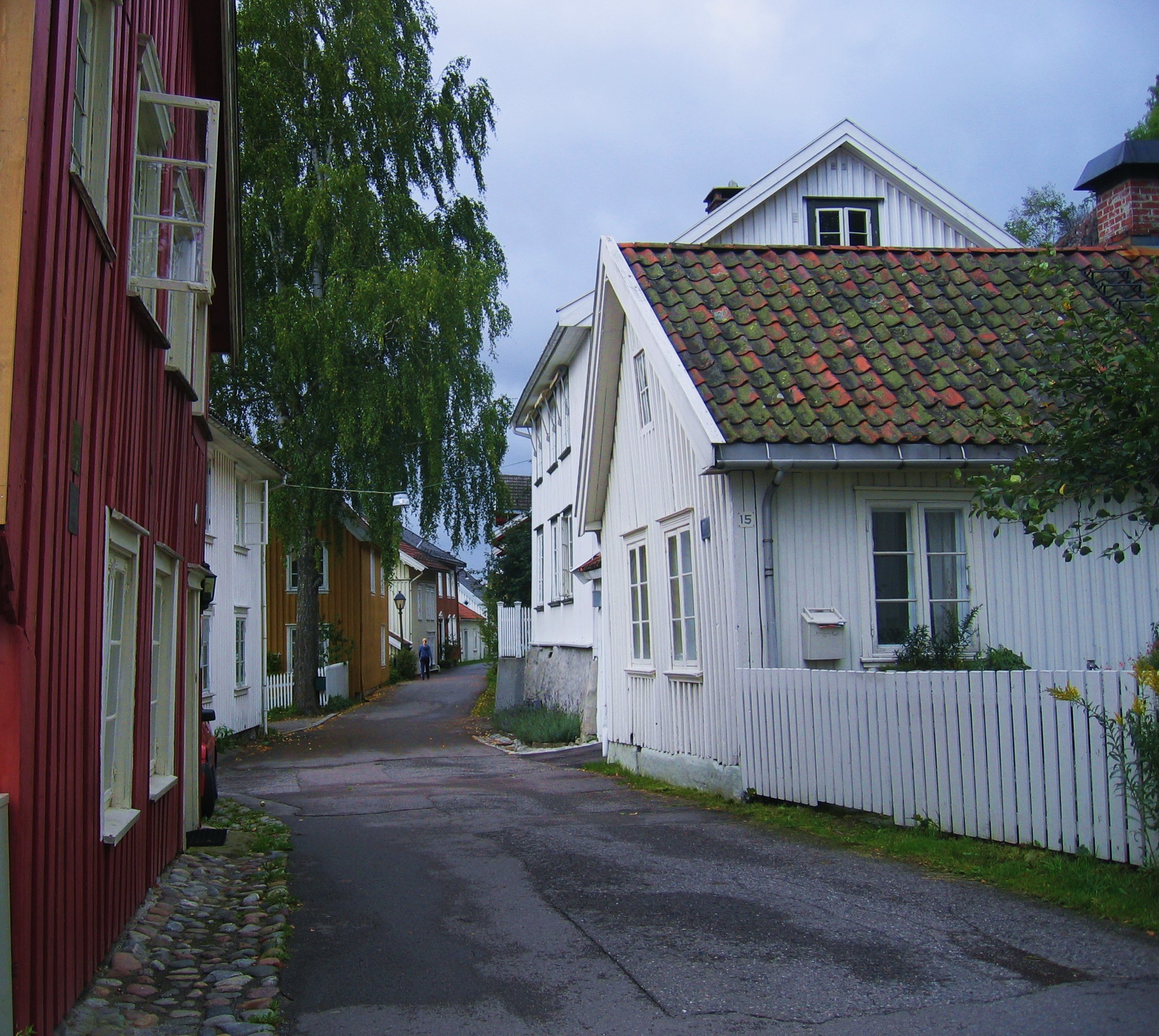
Tønsberg,by Karl Ragnar Gjertsen Krg.
[GFDL or CC-BY-3.0]
We begin in Tønsberg, a coastal town to the south of Oslo where Wollstonecraft made a base for her treasure hunt. It's a pretty town, a jumble of coloured wooden houses that look like attractive garden sheds.
(Some things have changed: in Mary's day there were about 1500 inhabitants, and now there are almost 40 000.)
With a delightful local guide, Ursula Houge, I visit the places where our heroine relaxed, posted many letters to the undeserving Imlay, and dined out with Tønsberg's finest.
Kragerø, Norway
Some the ink spilled here became Letters Written in Sweden, Norway and Denmark, arguably Mary's best-known book after A Vindication of the Rights of Woman (though I suppose A Vindication of the Rights of Men ranks up there too). Bee told me that she discovered Mary through the Scandinavian letters. I've tended to come across feminists and democrats who know Mary through the more political angles to her life, but there must be many readers who found her first as a proto-Romantic. (And, of course, many would know her only as the mother of Mary Shelley, or, even more commonly, mistake her for the author of Frankenstein.) 
Wollstonecraft exclaims: "Norwegians enjoy all the blessings of freedom," but it's not just Norway's political possibilities that inspire her. Nature is hugely important. She responds to the sublime in the wilderness around her with abandon, and a lot of exclamation marks. Her new way of travel writing profoundly influenced subsequent Romantic writers; Coleridge's "Kubla Khan" has clear echoes of the book.
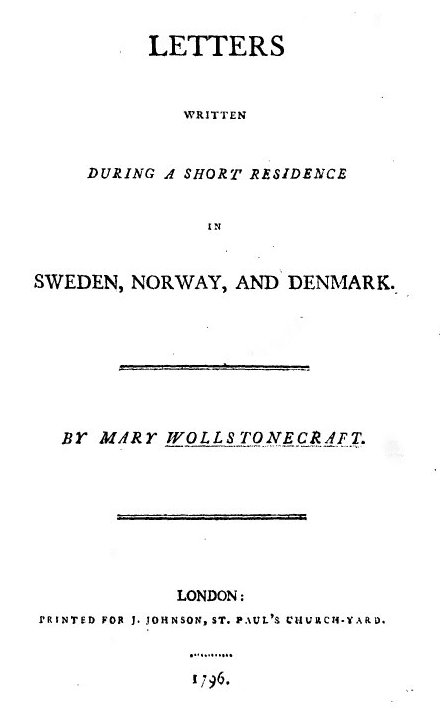
Let us not forget that those exclamation marks made William Godwin her husband: the anarchist philosopher had written against the institution of marriage, and was acquainted with Mary only somewhat unwillingly, but he fell head over bachelor heels on reading the newly published Letters. The only line of his that I can quote from memory is: "If ever there was a book calculated to make a man in love with its author, this appears to me to be the book." Phwoar! That's about as racy as dearest Wm ever got. Bee named her travelling companion William, by the way:
Will (the baby) and I are staying in a hostel just below the brow of the hill on which Wollstonecraft often sat, overlooking the town and the surrounding sea. She wrote: "the white sails… turned the cliffs, or seemed to take shelter under the pines which covered the little islands that so gracefully rose to render the terrific ocean beautiful. The fishermen were calmly casting their nets; whilst the seagulls hovered over the unruffled deep."
By Bilden är tagen av en amatörfotograf.Pihlbaoge
Doesn't it sound idyllic? 

Wollstonecraft travelled mostly by boat, heading westward in pursuit of the Norwegian captain who did a runner with Imlay's cargo of silver. I've enlisted the help of Gunnar Molden, a local historian and Wollstonecraft enthusiast, whose dogged research into this treacherous tale spans decades and countries. From Kragerø, Molden has arranged for a boat to take us on to Wollstonecraft's final stop. The moment we meet, we set about speculating on the missing silver and the Norwegian captain. Mick, the skipper, hadn't heard of Wollstonecraft's adventures here, but he's soon drawn in. We eat sugared cinnamon buns and I count jellyfish as we set sail. The sun is dazzling, there's a fair wind, and I'm so excited I can't sit still.

The article was months delayed by terrorist shooting and polar bear attack. By now the great British public has forgotten what a bad summer it has been for teenagers camping in Norway, and can turn again to the holiday fantasies of classic children's books, made real in the unreal blueness of Scandinavian seas: 
The lure of these islands is strong; there is magic in the notion of a miniature world, of setting foot on a child-sized kingdom. Watery adventures from childhood books spring to mind: Swallows and Amazons, The Famous Five, The Wind in the Willows.
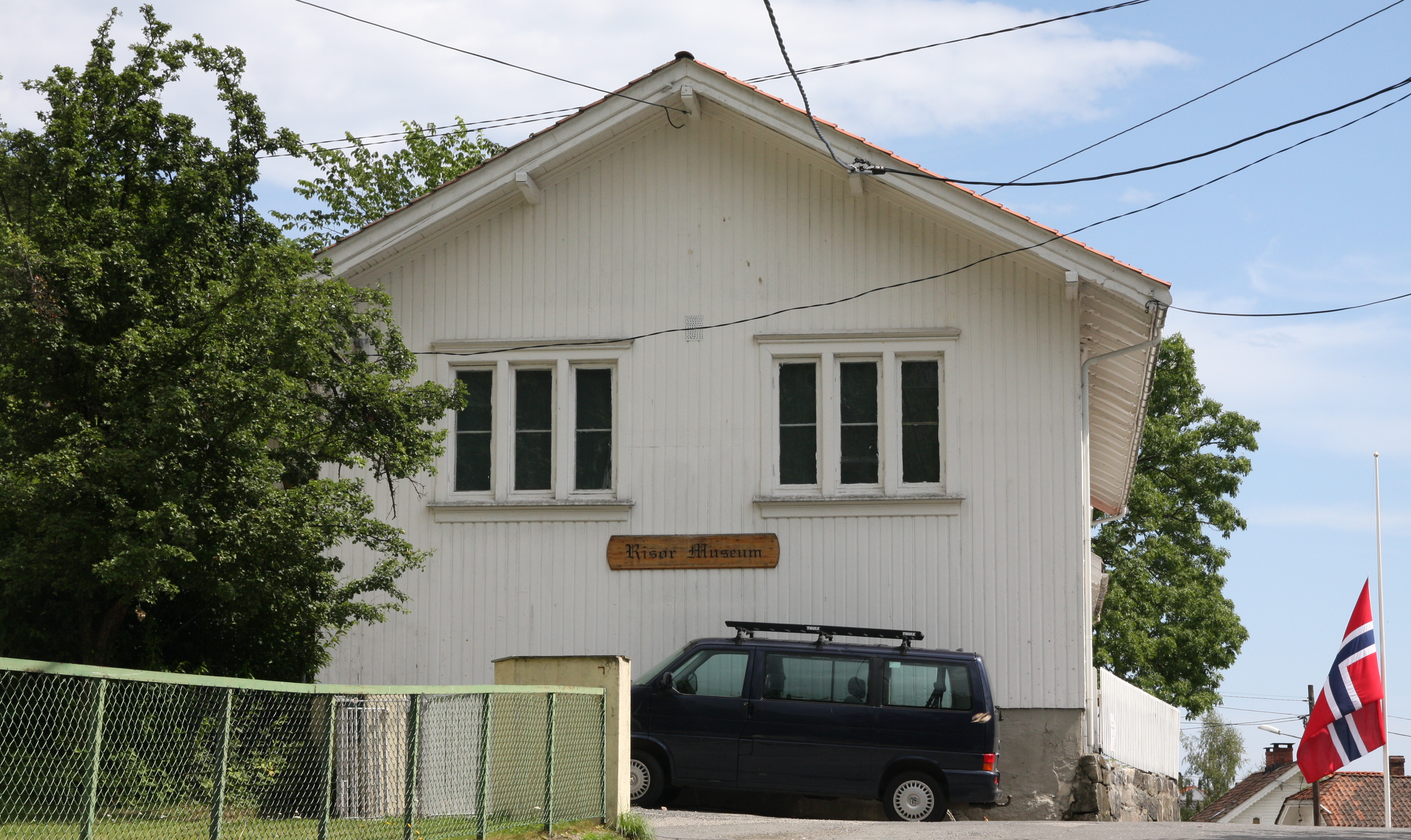
Visor Museum, by Jarvin - Jarle Vines [GFDL or CC-BY-3.0]
Book your holiday now, but do be aware that:
Norway is expensive.... Wollstonecraft remarked that "my bill at Tønsberg was ... much higher than it ought to have been" and the intervening 216 years have done nothing to change this. 
Speaking of dosh, Bee has very kindly donated her payment for Norway and Mary Wollstonecraft: My heroine of the high seas  to the campaign to raise a memorial statue. (I'm on the working group and have written about the project here.) In fact, Bee is offering more of her talents than mere money, and Mary on the Green can only benefit from her energy and enthusiasm. "She is a warm-hearted multi-mum writer/producer on the high seas, and I think I am a bit in love with her."


All images from Wikimedia Commons.

Sunday, July 10, 2011

Mary and France

Today we begin a series on Mary Wollstonecraft and her associations with France. (Last week, Independence Day and the USA; this week, Britain's nearest neighbour, leading up to Bastille Day.) Mary spent significant years in France, as the Revolution ripened into Terror, and met Gilbert Imlay and bore him baby Frances, in between documenting the unfolding dramas. But before she ever set foot there, she had made her name in London as a commentator and political theorist with a long essay about the French Revolution, A Vindication of the Rights of Men. This pamphlet was published mere weeks after Edmund Burke's attack on the revolutionary reverend, Richard Price of Newington Green Unitarian Church.

In order that liberty should have a firm foundation, an acquaintance with the world would naturally lead cool men to conclude that it must be laid, knowing the weakness of the human heart, and the ‘deceitfulness of riches,’ either by poor men, or philosophers, if a sufficient number of men, disinterested from principle, or truly wise, could be found. Was it natural to expect that sensual prejudices should give way to reason, or present feelings to enlarged views?–No; I am afraid that human nature is still in such a weak state, that the abolition of titles, the corner-stone of despotism, could only have been the work of men who had no titles to sacrifice. The National Assembly, it is true, contains some honourable exceptions; but the majority had not such powerful feelings to struggle with, when reason led them to respect the naked dignity of virtue. 
Weak minds are always timid. And what can equal the weakness of mind produced by servile flattery, and the vapid pleasures that neither hope nor fear seasoned? Had the constitution of France been new modelled, or more cautiously repaired, by the lovers of elegance and beauty, it is natural to suppose that the imagination would have erected a fragile temporary building; or the power of one tyrant, divided amongst a hundred, might have rendered the struggle for liberty only a choice of masters. And the glorious chance that is now given to human nature of attaining more virtue and happiness than has hitherto blessed our globe, might have been sacrificed to a meteor of the imagination, a bubble of passion.
 Mary Wollstonecraft was not alone in her high hopes for the birth of a new chapter in the story of humanity.

Friday, July 8, 2011

Mary and the USA

By DevinCook [Public domain],
 via Wikimedia Commons
[This was posted a few days ago, to begin the week with a focus on the United States. Somehow it disappeared. Probably my fault; grr, blogstuff.]

Of all the countries that Mary Wollstonecraft never travelled to, the United States was the closest to her. She was shaped by her multiple abodes around England, and she was formed by teaching in Ireland, observing in Portugal, writing in France, and travelling through Scandinavia. But the United States, and especially its frontier, represented the hope of a better world, literally the re-making of human nature.

Lyndall Gordon, in an essay on MW's America, says:

Mary Wollstonecraft never came to America, but she did imagine it in the 1780s and 1790s, and did plan to emigrate with her American partner, Gilbert Imlay. They intended to farm on the frontier, and she would have done so had not Imlay withdrawn. Her youngest brother, Charles Wollstonecraft, had already settled in the territory of Ohio, and Mary had sold family property to buy land there. She wished to join him, and to bring along her two sisters, Eliza and Everina. 
She had met Imlay with a prepared mind, a pro-American ideology. ... the prime importance of America for Wollstonecraft was not personal but political, and preceded her attachment to Imlay by nearly ten years.
This is because, Gordon posits, MW's interest in the USA dates back to her early days as a schoolmistress at Newington Green, hanging out with Unitarians and radical political thinkers. She reminds us that Rev Dr Richard price, minister of that congregation, considered the American Revolution "the fairest experiment ever tried in human affairs."

This week, given the season, we will celebrate Mary's connection to the still nascent nation.

Wednesday, July 6, 2011

On the frontier of the United States

By DevinCook [Public domain],
 via Wikimedia Commons
Mary Wollstonecraft travelled widely for an unmarried woman of modest means, but she never made it to the United States. She lived in many parts of England as a child and young woman; she visited Lisbon, under unhappy circumstances, and found its earthquaked cityscape matched her heart; she worked in Ireland, as a governess to the aristocracy, with whom she had little patience; she moved to France to document the ongoing revolution, and returned a mother; she (and her babe) wandered through Scandinavia, searching for a missing silver ship.

from Open Library
The first man she called husband was Gilbert Imlay, soldier, writer, businessman, diplomat, possibly spy. They met in Paris, but he had made a name for himself by publishing A Topographical Description of the Western Territory of North America in London in 1792. It was based on his time in Kentucky, speculating in land among other things. (When he left, it was suddenly and with debts undischarged.) 


This book about the frontier was intended to encourage other settlers, and with these visions he wooed Mary. She was quite willing to begin a new life, far from the strife of Europe; her youngest brother was already over there. In France the Revolution had become the Terror; in England the state was repressive. Far better to risk it all in some new, clean, unspoiled land! What she thought of the indigenous inhabitants, I do not know.


Imagining Mary Wollstonecraft on the frontiers of American wilderness, I think of Susannah Moodie, a gently brought up Englishwoman who found herself Roughing It in the Bush. How would Mary have coped?
George Caleb Bingham [Public domain], via Wikimedia Commons


Monday, July 4, 2011

Rev Dr Richard Price and the American Revolution

By DevinCook [Public domain],
 via Wikimedia Commons
Happy United States Day! Mary Wollstonecraft never made it to the unshackled colonies, but for some time she yearned for the frontier, her heart full of Gilbert Imlay, her faithless lover, and her head full of Richard Price, "whose talents and modest virtues place him high in the scale of moral excellence". We looked before at A Vindication of the Rights of MEN, her swift response to Edmund Burke's attack on Price, and the respect in which she held the minister of the Dissenting community where she had settled. Yesterday, at the beginning of this week with a focus on the USA, we looked at Lyndall Gordon's explanation of why Mary was so drawn to that country. In brief: because the birth of this nation in the New World represented a fresh beginning, not merely personal, but political in all possible senses. In fact, I might say "one small step for (a) man, one giant leap for mankind". For womankind, it remained to be seen, but the optimists saw reason for hope. 

"Remember the ladies," Abigail Adams had written to her husband John in 1776, when he was assisting in the drafting of the constitution. (Then he had been a congressman; they moved to London when he was appointed ambassador; by the time Mary was in Paris, Adams was vice-president, and from 1797, president.) The Adamses, and many others associated with the United States, went to hear Price preach. People flocked to the sermons of "this respectable old man, in his pulpit, with hands clasped, and eyes devoutly fixed, praying with all the simple energy of unaffected piety; or, when more erect, inculcating the dignity of virtue, and enforcing the doctrines his life adorns" (as MW says as she begins her rebuttal to Burke). In his home and church she might have bumped into:
Founding Fathers of the United States such as Benjamin Franklin, Thomas Jefferson, and Thomas Paine; other American politicians such as John Adams, who later became the second president of the United States, and his wife Abigail; British politicians such as Lord Lyttleton, the Earl of Shelburne, Earl Stanhope (known as "Citizen Stanhope"), and even the Prime Minister William Pitt ; philosophers David Hume and Adam Smith; agitators such as prison reformer John Howard, gadfly John Horne Tooke, and husband and wife John and Ann Jebb, who between them campaigned on expansion of the franchise, opposition to the war with America, support for the French Revolution, abolitionism, and an end to legal discrimination against Roman Catholics; writers such as poet and banker Samuel Rogers; and clergyman-mathematician Thomas Bayes, of Bayes' theorem.
(This is from the biography of Richard Price on Wikipedia, minus the profusion of distracting links; I have no embarrassment in sharing my passion for education and freedom.) We know that he influenced her thoughts on religion, and we can debate whether or not she was a Unitarian, but what is equally intriguing is her political development while at Newington Green. She was surrounded by stimulating thinkers who took women and education seriously; they lent her books; they included her in their social circles and conversations. Rev Price was particularly kind to her, but so was Mrs Burgh, and so were others. The whole atmosphere of the village was one of high-minded Dissent. During the decade before she arrived there:
Price turned his attention to the question of the American colonies. He had from the first been strongly opposed to the war, and in 1776 he published a pamphlet entitled Observations on the Nature of Civil Liberty, the Principles of Government, and the Justice and Policy of the War with America. Sixty thousand copies of this work were sold within a few days; a cheap edition was soon issued which sold twice as many copies; the pamphlet was extolled by one set of politicians and abused by another....it is said that his pamphlet had no inconsiderable share in determining the Americans to declare their independence.
 
A second pamphlet on the war with America, the debts of Great Britain, and kindred topics followed in the spring of 1777. His name thus became identified with the cause of American independence. He was the intimate friend of Franklin; he corresponded with Turgot; and in the winter of 1778 he was invited by Congress to go to America and assist in the financial administration of the states. This offer he refused from unwillingness to quit his own country and his family connections. In 1781 he, solely with George Washington, received the degree of Doctor of Laws from Yale College.
(Source, ditto; stripped, ditto.) So Mary Wollstonecraft was primed with these arguments when she met Gilbert Imlay. Lyndall Gordon wants to give him a more rounded portrait, to give us a better sense of why Mary fell so hard. He was: 
the writer of a respected book on the frontier and ...an upholder of values Wollstonecraft shared: an abhorrence of slavery and militarism; a regard for native Americans; and sympathy for women trapped in a marriage contract that denied them basic human rights.
By the time Mary Wollstonecraft came to womanhood, the American Revolution was in full swing. In her 20s, political attention swung also to the fires in Ireland (which she had helped to stoke, in the tiniest way, via her pupil Margaret King); in her 30s, the 1790s, the eyes of those longing for liberty were on Haiti and France.  The righteousness of the cause of the American colonists was taken for granted in the circles in which Mary moved.  Had Imlay proved more steadfast, in all likelihood the couple would have moved to the United States, where she would have carved out a name and a future for herself on unploughed soil. But he was who he was, and so she jumped off the bridge and searched for treasure in Scandinavia and became the grandmother of Frankenstein, none of which would have happened otherwise. What if, what if. We are where we are.

So, poised somewhat halfway between our celebration of Canada Day and next week's French commemorations, once again: Happy Fourth of July!

Image: Betsy Ross 1777, By Jean Leon Gerome Ferris (1863–1930) [Public domain], via Wikimedia Commons

Sunday, July 3, 2011

An admirer returns from Norway

One of the highlights of the week was meeting Bee Rowlatt, who recently journeyed to Norway on a Mary Wollstonecraft pilgrimage. She is the one who I said had a baby under one arm and a book proposal under the other. Bee found Mary first through the Romantic letters rather than the rational essays, which is fitting, since her first book, Talking About Jane Austen in Baghdad, was about an epistolary friendship with an Iraqi academic. (More here.)

Bee got to experience Scandinavia at Solstice, or near enough, and met a Cockney ship's captain, and stayed in the garden of a Communist mayor, and had a fortnight alone with her almost year-old son William (a good name!), who proved to be a great ice-breaker.

Bee has an article coming up for the travel section of the Telegraph [edit: here], and then, more ambitiously, a book! I referred before to Melissa Benn and her Madonna and Child: towards a new politics of motherhood. Another book that came up in discussion was the recent How to be a Woman by Caitlin Moran: something zeitgeist-y. Bee uses the phrase "super lightweight" for what she has in mind, some sort of a meditation on Mary Wollstonecraft then and now, and being a woman and a mother, combined with a travel narrative. No book contract yet -- all offers considered.

Bee is a woman of many talents. For one thing, she had the determination necessary to get her new friend out of Iraq and to safety in England, and I know enough about the refugee process to know it is a long and spirit-sapping bureaucratic paper-chase. Bee works at the World Service, and rides a bicycle like many sensible Londoners, and is beautiful, in a healthy scrubbed effortless way, and can pronounce Tønsberg quite convincingly. Her children are charming -- at least, the 75% of them that I got to meet when she brought them to Mary's St Pancras graveside, where the kids ran around and she told me about her trip. What an adventure!

By Hesse1309 (Own work) [GFDL (www.gnu.org/copyleft/fdl.html) 
or CC-BY-SA-3.0 (www.creativecommons.org/licenses/by-sa/3.0/)], via Wikimedia Commons

Wednesday, June 22, 2011

Scandinavia at Solstice

Longest day of the year - and all the longer in sub-polar Scandinavia. It is a chilly day in London, so we shall indulge in a nice chunk of pre-Romantic sun-worship. (It's also the shortest day of the year Down Under, so it's fitting that I've been exchanging flattery with Australian amateur Vicki Parslow Stafford, the caped crusader of genealogy, who, as we saw yesterday, discovered the paternity of one of Mary Wollstonecraft's lost daughters.)

But first, context: Mary travelled in Sweden, Norway, and Denmark, from June to September 1795, as an agent of Gilbert Imlay, who had mislaid a silver treasure ship. In the letter charging her with this quest, he describes her as his "wife and best friend". Hollow laughter, as Mary undertook her Scandinavian journey between Imlay-inspired suicide attempts. She took heart-break seriously: his infidelity was the betrayal of ideals. On returning to London from France with their baby daughter, she found the man she regarded as her husband shacked up with a woman of the stage; she took laudnum; he rescued her; she offered to prove her devotion; he packed her off to foreign parts. On returning from Scandinavia, she found him still unfaithful, and jumped off Putney Bridge. So I guess all that sublime northern nature wasn't quite enough to reconcile her to her love-torn fate.

What we need is something of the sublime. Mary encounters, alone and alert, a night at high latitude:

Midnight was coming on, yet it might with such propriety have been termed the noon of night that, had Young ever travelled towards the north, I should not have wondered at his becoming enamoured of the moon.  But it is not the Queen of Night alone who reigns here in all her splendour, though the sun, loitering just below the horizon, decks her within a golden tinge from his car, illuminating the cliffs that hide him; the heavens also, of a clear softened blue, throw her forward, and the evening star appears a smaller moon to the naked eye.  The huge shadows of the rocks, fringed with firs, concentrating the views without darkening them, excited that tender melancholy which, sublimating the imagination, exalts rather than depresses the mind.
My companions fell asleep—fortunately they did not snore; and I contemplated, fearless of idle questions, a night such as I had never before seen or felt, to charm the senses, and calm the heart.  The very air was balmy as it freshened into morn, producing the most voluptuous sensations.  A vague pleasurable sentiment absorbed me, as I opened my bosom to the embraces of nature; and my soul rose to its Author, with the chirping of the solitary birds, which began to feel, rather than see, advancing day.  I had leisure to mark its progress.  The grey morn, streaked with silvery rays, ushered in the orient beams (how beautifully varying into purple!), yet I was sorry to lose the soft watery clouds which preceded them, exciting a kind of expectation that made me almost afraid to breathe, lest I should break the charm.  I saw the sun—and sighed.

("Young" must be Edward Young (1681-1765), the poet identified by Barbara Taylor as a source "for her 'romantic' themes". Young was best known for his long poem ''Night Thoughts'', more correctly entitled The Complaint: or, Night-Thoughts on Life, Death, & Immortality, a title guaranteed to set any intellectual depressive musing. It was re-issued in 1795, with illustrations commissioned from William Blake, who a couple of years earlier had tackled MW's Original Stories from Real Life.)

So, as the "glorious luminary" reaches its zenith in the northern hemisphere, and high summer rolls on before us, we leave Mary to the composing of another of her  Letters Written in Sweden, Norway, and Denmark.

Photo of sunrise (albeit not in Norway) by Fabolu (selbst aufgenommen von Fabolu) 
[GFDL 1.2 (www.gnu.org/licenses/old-licenses/fdl-1.2.html)], via Wikimedia Commons