Saturday, October 8, 2011

Hidden photomontage in Bradford

If you missed "Mary Wollstonecraft and the Newington Green Dissenters, 1784" when it was at the Museum of London, fear not! Hidden, the magnificent series of photo-montages by Red Saunders, is up once again. This time it is at the Impressions Gallery in Bradford, the other side of Yorkshire from Beverley, where Mary spent happy childhood days (and fell in love with Ardent Jane and her library).


Here is our previous post about Hidden, and the artist's thoughts on the history not taught at school.


PS And there's an article by Paul Furness in the Socialist Worker: Hidden: Illustrating the secret history of workers’ resistance, describing Mary wearing her rosette for the French Revolution.  He also lists three new photomontages: Captain Swing, the agricultural riots in the 1830s; Hilda of Whitby,  a 7th century nun "who insisted that girls had as much right to education as boys", and:

Then we meet the Grindletonians. These were mainly women from the Yorkshire Pennine village of Grindleton who challenged the accepted world view in the run up to the English Civil War. They argued that a new way of living was possible in this old world if only the people living in it would seize it back from those who run it. 

The picture shows a gathering of radical soldiers and villagers seated together in a clearing at dusk. They listen intently to a woman who tells them that a new world is not just possible but is within their reach if only they would stand up as one and take it.It was little gatherings like this that mushroomed into the Civil War—in fact a revolution where the king’s head came off.

Image kindly provided by Red Saunders.

Thursday, October 6, 2011

The world turned upside down

Matthew Buckingham's The Spirit and the Letter
On show at the Brooklyn Museum till 8 January 2012 is Matthew Buckingham's installation "The Spirit and the Letter", a homage to Mary Wollstonecraft, with spoken excerpts of A Vindication of the Rights of Woman. The New Yorker calls it "simple but striking", and gives him form ("When it comes to revisiting history, few artists capture complexities and contradictions with the kind of lyrical efficiency that Buckingham brings to the endeavor"). Buckingham's piece was co-commissioned by the Camden Arts Centre here in London, and in 2008 was exhibited a third of the globe away at the Henry Art Gallery in Seattle. 


Now that the video installation is in Brooklyn, it has been joined by some of the artifacts from the local library - as in, the New York Public Library, which provided much of the impetus for Shelley's Ghost. That exhibition, which I characterised half a year ago as "Mary, her husband, their daughter, and her lover (and their friends)", was beautifully displayed at the Bodleian, complete with Mary Shelley's silver toilet set and the tousle-hair'd poet's guitar. Bits of the exhibition are at Dove Cottage at the moment, visiting the Lake District poets for the summer; I had understood, reading the exhibition in Oxford, that soon the show would reincarnate at the NYPL. 


The review in Broadway World says:

The Spirit and the Letter places the viewer in a space that evokes inversion: a simple chandelier, glowing dimly, protrudes upward from the floor, and an upside down mirror hangs on the wall. A video image, projected onto a large wall, shows a room where the same chandelier can be seen in its "correct" orientation, hanging from the ceiling. In this room, a woman in 18th century dress paces across the floor. She exits but then after a moment reappears standing on the ceiling, disobeying gravity as she moves through the image, resembling a ghost of sorts. Portraying Mary Wollstonecraft, this actor delivers a erratic but impassioned exposition of Wollstonecraft's ideas, edited from Wollstonecraft's books, letters, memoirs and tracts, including A Vindication of the Rights of Women.

The Brooklyn Museum holds Judy Chicago's Dinner Party as the centrepiece of its Elizabeth A. Sackler Center for Feminist Art. Shame, shame, on D.C.'s National Museum of Women in the Arts, for missing the chance to acquire those 39 place settings, of which one is dedicated to Mary Wollstonecraft.


Tuesday, October 4, 2011

A book to save up for

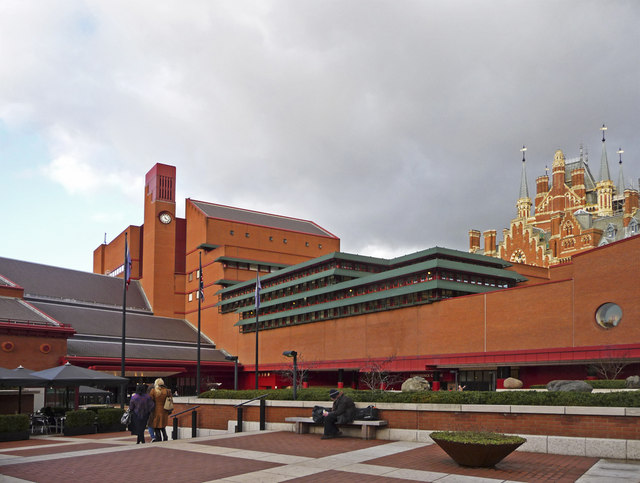
British Library, by Christine Matthews
You just know that with a series title such as International Library of Essays in the History of Social and Political Thought, the forthcoming tome on Mary Wollstonecraft is not going to be something to read in the bath.  Working 27.5 hours at current UK adult minimum wage will get you 588 pages of hardback quality. You have until April to save up that £160, or to persuade your favourite library to acquire a copy upon publication. It sounds fantastic, though:
The essays in this collection represent the explosion of scholarly interest since the 1960s in the pioneering feminist, philosopher, novelist, and political theorist, Mary Wollstonecraft. This interdisciplinary selection, which is organized by theme and genre, demonstrates Wollstonecraft's importance in contemporary social, political and sexual theory and in Romantic studies.
It goes all the way back to the beginning, and I hope it will set to rest for once and for all the misconception that both author and magnum opus  were shunned on its publication:
The book examines the reception of Wollstonecraft's Vindication of the Rights of Woman but it also deals with the full range of her work from travel writing, education, religion and conduct literature to her novels, letters and literary reviews.
Most of the content, or possibly all of it, is reprints. Some of the essays go back over a century; some are much more recent: 
As well as reproducing the most important modern Wollstonecraft scholarship the collection tracks the development of the author's reputation from the nineteenth century. The essays reprinted here (from early appreciations by George Eliot, Emma Goldman and Virginia Woolf to the work of twenty-first century scholars) include many of the most influential accounts of Wollstonecraft's remarkable contribution to the development of modern political and social thought. The book is essential reading for students of Wollstonecraft and late eighteenth-century women's writing, history, and politics. 
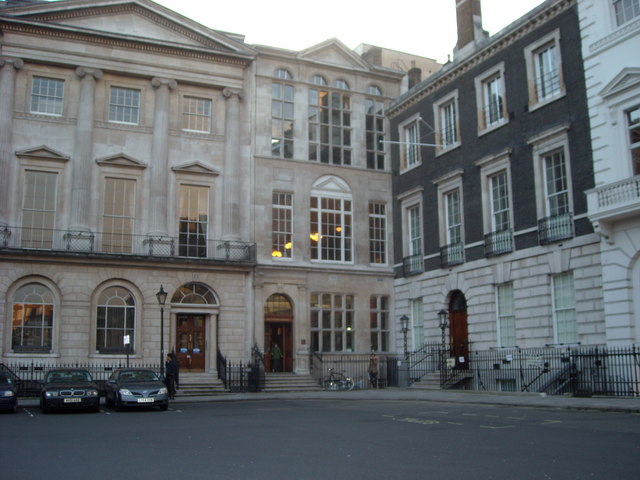
London Library, by Bill Johnson 
It is from Ashgate, which I hadn't heard of before. Others in the International Library of Essays include Tom Paine, Jeremy Bentham, Rousseau, Aristotle, Hannah Arendt, Edmund Burke, and many others. This volume has been edited by Jane Moore, from Cardiff University, a reader in the School of English, Communication and Philosophy -- NB not history.  She wrote a rather more slender book on MW in 1999, at the request of the British Council, part of "a series of innovative critical studies introducing writers and their contexts to a wide range of readers".


What tense should we use for the forthcoming heavy-weight volume: has been edited? Is being? It can't take another six months to print and distribute a book, even if the physical presses are in deepest China. It's funny, isn't it: despite the rush-rush of modern life, so commented upon, some things were much quicker in Mary's day, particularly in the publishing business. Lyndall Gordon says A Vindication of the Rights of Men is "no hasty pamphlet" (chapter 7 of her biography Vindication), but from Mary's letters we know that as she was writing her books, the printer's devil was knocking on the door, wanting to take the manuscript pages to Joseph Johnson for typesetting. No luxury of writing an entire draft, and going back over it before the publisher saw it: rush-rush indeed.


And just look at the contents! This is only partial, but my goodness, am I partial. Random good bits in bold.


Part I Survey of the Work and Reputation:
  • Margaret Fuller and Mary Wollstonecraft, George Eliot; 
  • Mary Wollstonecraft: her tragic life and her passionate struggle for freedom, Emma Goldman; 
  • Mary Wollstonecraft, Virginia Woolf; 
  • Feminist studies and the discipline: a study of Mary Wollstonecraft, Virginia Sapiro; 
  • On the reception of Mary Wollstonecraft's A Vindication of the Rights of Woman, R.M. Janes; 
  • Mary Wollstonecraft: texts and contexts, Gary Kelly; 
  • Remembering Mary Wollstonecraft on the bicentenary of the publication of a Vindication of the Rights of Woman, Sylvana Tomaselli. 

Part II Contexts: History, Politics, Culture: Wollstonecraft and Social, Philosophical and Political Theory: 

  • Mary Wollstonecraft: 18th-century commonwealthwoman, G.J. Barker-Benfield; 
  • Wollstonecraft, feminism, and democracy: 'being Bastilled', Virginia Sapiro; 
  • Mary Wollstonecraft and the 'reserve of reason', Simon Swift; 
Wollstonecraft, Gender and Enlightenment: 
  • The Enlightenment debate on women, Sylvana Tomaselli; 
  • Mary Wollstonecraft and Enlightenment desire, Janet Todd; 
  • Wollstonecraft, Education and Conduct Literature: Her demands for the education of woman, Emma Rauschenbush-Clough; 
  • Mary, Mary, quite contrary, or, Mary Astell and Mary Wollstonecraft compared, Regina Janes; 
  • Advice and enlightenment: Mary Wollstonecraft and sex education, Vivien Jones; 
Wollstonecraft and the French Revolution/Wollstonecraft's Historical and Moral View of the French Revolution: 
  • 'The grand causes which combine to carry mankind forward': Wollstonecraft, history and revolution, Jane Rendall; 
  • Gender in revolution: Edmund Burke and Mary Wollstonecraft, Tom Furniss; 
Wollstonecraft and Religion: 
  • For the love of God: religion and the erotic imagination in Wollstonecraft's feminism, Barbara Taylor; 
  • Sibylline apocalyptics: Mary Wollstonecraft's Vindication of the Rights of Woman and Job's mother's womb, Mary Wilson Carpenter; 
Wollstonecraft and Romanticism: 
  • Death in the face of nature, self, society and body in Wollstonecraft's Letters Written in Sweden, Norway and Denmark, John Whale; 
  • Godwin's Memoirs of Wollstonecraft: the shaping of self and subject, Mitzi Myers; 
  • 'No equal mind': Mary Wollstonecraft and the young Romantics, Harriet Jump;
Wollstonecraft, Femininity/Sexuality/Feminism: 
  • Mary Wollstonecraft and the wild wish of early feminism, Barbara Taylor; 
  • Wild nights: pleasure/sexuality/feminism, Cora Kaplan; 
  • (Female) philosophy in the bedroom: Mary Wollstonecraft and female sexuality, Gary Kelly; 
  • Wollstonecraft, Slavery and the Orient: Mary Wollstonecraft and the problematic of slavery, Moira Ferguson; 
  • Wollstonecraft's Death: The death of Mary Wollstonecraft, Vivien Jones. 
Part III Texts, Novels, Literary Reviews, Letters: 

Wollstonecraft's Literary reviews:
  • Mary Wollstonecraft's contributions to analytical review, Sally N. Stewart; 
Wollstonecraft's Fictions – Mary, A Fiction and The Wrongs of Woman: or Maria, a Fragment: 
  • Mary Wollstonecraft: the gender of genres in late 18th-century England, Mary Poovey;
  • Wollstonecraft and Godwin: reading the secrets of the political novel, Tilottama Rajan;
Wollstonecraft's Letters: 
  • Letters Written…in Sweden: toward Romantic autobiography, Mitzi Myers; 
  • Mary Wollstonecraft's letters, Janet Todd
Note the lacunae: no Lyndall Gordon, no treasure ship, no modern philosophers, no Claire Tomalin, no suffragettes, no charting of the C19 rehabilitation (no Elizabeth Robins Pennell, who I'm rather fond of). But still...


Somehow I have to get my hands on a copy.


Images from Wikimedia Commons.


Monday, October 3, 2011

Women's Institute bends an ear

The venerable Women's Institute has several zeitgeisty new branches in inner London, and Stoke Newington has asked me to tell them all about Mary Wollstonecraft. This will happen a week today, on the evening of 10 October 2011. Entrance is free, as they are always looking for new prospective members. £5, as they are serving wine and cheese, with a 1970s theme. (If, on the other hand, you are of the gentlemanly persuasion, sadly the door is barred to you. But you could always organise a group of curious men on another occasion; Mary addressed many such assemblies. Or meet me in the pub afterwards.)


The WI formed in Canada in 1897, spurred by Adelaide Hoodless's anger at lethally adulterated milk, and quickly became a way of bringing women together, for education but also for social support and social change. It took off in the mother country from 1915, where rural women were often socially restricted to sister congregants at church or chapel, and never the twain shall meet. One author argued, on its Canadian centenary, that the WI represented The Acceptable Face of Feminism.


The WI intentionally crossed class and religious divides - as did Mary. Her novel Maria: Or, the Wrongs of Woman has its central figure, the falsely imprisoned middle class woman, forge a bond of sympathy with her working class wardress Jemima; this is said to be the first female cross-class solidarity in literature. And the WI still campaigns: they have a dozen listed on their website, from libraries to dairies, from maternal healthcare in the Third World to "care not custody" in the UK, against locking up the mentally ill. I can see some themes emerging....

Friday, September 30, 2011

July, August, September overview

Another overview, this time of three months. A busy first half of July, followed by a nice long rest in August (in a cool room, with a damp cloth on my forehead), and then picking up the threads as the autumn begins.

We have had news of a Feburary philosophy conference in Sweden, and the Dutch humanists' broadcast is in a few weeks. (Both of these focus on Mary Wollstonecraft's philosophy, not her value to history or literature or education or theology.) There has been the annual pilgrimage of visitors to the only extant building associated with her. There has been another sort of pilgrimage, in the steps of her Norwegian wanderings. Earlier on, we had a brief series on Mary and the USA and Mary and France, in honour of those countries' revolutionary July birthday beginnings.

Attempting close to daily postings was too much: too exhausting for me, and no doubt just as tiring for my readers. So now I am trying for a rhythm of posting every other day, or perhaps thrice a week. When I've cleared the backlog of time-sensitive items, I'd like to develop new weekly series, of book reviews for instance, or more London walks, or, particularly, more statues to consider.

The pageviews in the last month are 1006; those from all time are 11 587. The month's dip is down to taking time off, including from Twitter publicity. Let's see where the next month leads. I already have several items queued up.

Thursday, September 29, 2011

Dutch TV edges closer

Some time ago I wrote of the Dutch Humanist TV station and its upcoming 12-part series on philosophers, of which Mary Wollstonecraft will get one hour-long episiode. (I like their graphic for the series, to the left.) I was interviewed via Twitter in June, which I reported at the time. I have heard from the production team again, and the broadcast will be a month today, 29 October. 


The researcher has assured me that the episode will be uploaded to Vimeo, for those out of reach of the Netherlands. Of course, it will be in Dutch, which is a bit of a hindrance for some of us. Fortunately, written text can be spun through Google Translate, followed by a quick clean-up. Herewith some of the press release.
Guests in this broadcast are Leon Heuts, philosopher, editor of Philosophy Magazine and fan of Mary Wollstonecraft. He holds a Twitter session with another fan: Roberta Wedge from London. On her blog Wedge researches everything to do with Wollstonecraft. She has a Twitter account as Mary.  
How can women combine passion with a career? Dorothée Forma [award-winning documentary maker] and Maruja Remijn Bobo, gender studies professor at the University of Amsterdam, follow Marieke Bax, businesswoman and founder of Talent to the Top, the initiative for more women to the top.  
Maruja Remijn Bobo: "On the one hand, Mary Wollstonecraft is a very interesting philosopher; on the other hand, she is a very passionate human being who travelled and loved. She was a very contemporary, modern, self-made woman."

Here's the Dutch Humanist TV take on Mary's life. NB the attention given to her marriage with dearest Wm:
Mary Wollstonecraft wrote A Vindication of the Rights of Woman, one of the first feminist works. In her time, women were primarily seen as property, but Wollstonecraft claims that they have the same rights as men. She writes a lot, novels and travel essays. She is one of the first women to live by the pen. She calls herself "the first of a new genus".

In 1792 Wollstonecraft departs for Paris to see the French Revolution at first hand. She meets the American Gilbert Imlay, with whom she has a daughter. After a painful break with Imlay and a failed suicide attempt, she becomes friends with the radical philosopher William Godwin, who rejects marriage and romance. Nevertheless they marry, emphasizing that their marriage is no concession to the prevailing morality, but they are completely equal partners. Mary Wollstonecraft died on September 10, 1797, 11 days after the birth of her daughter Mary.

Tuesday, September 27, 2011

Philosophers' confab


Lund University main building. By Magnus Bäck
[Public domain], via Wikimedia Commons
Finally, Mary Wollstonecraft is getting proper attention as a philosopher. A Swedish research programme called Understanding Agency: Conceptions of Action, Human Nature and Value in the Western Philosophic Tradition is one of the organisations giving her a full day:
On 23 February, 2012, there will be a one day symposium on the philosophy of Mary Wollstonecraft, Enlightenment thinker and feminist pioneer. The symposium takes place in Lund and is organized jointly by Understanding Agency and the Philosophical Psychology, Morality and Politics Research Unit at the Universities of Helsinki and Jyväskylä.
Regular readers of this blog will not be surprised to hear that Sandrine Berges (who is a serious academic force to contend with, and in her spare time also grapples with the Undead), is addressing this all-day argument of philosophers. Earlier this year, she spoke at Man and Nature from Descartes to Wollstonecraft, though that was in Istanbul, much closer to home at Bilkent.

There is no doubt that Mary Wollstonecraft's most famous book is A Vindication of the Rights of Woman, and her "re-discovery"* over the last half-century has been led by the scholars of women's history, a field of study for too long forgotten and suppressed. However, one of the purposes of this blog is to remind the world that Mary does not speak solely to women, or to feminists. She speaks to democrats, Romantics, educationalists, and many other groups. It is good to see philosophers getting their teeth into her, zombies or not.

More info on the academic confab here. (What is the difference between a conference and a symposium, anyway?) [Addendum: the post-conference page is here, with podcasts.]

-------------------------------------------------------------------------------------------------------------------------
*In scare quotes, because she was never forgotten: not immediately following her death, not in the aftermath of the French Revolution, not in the long decades leading up to an organised suffrage movement, not once women won the right to education and later the right to vote in one jurisdiction after another, not in the growing prosperity of the C20.