Showing posts with label review. Show all posts

Wednesday, March 14, 2012

Dear Wm's scribblings

Mary Wollstonecraft's last few years, some of her happiest, were intimately bound up with William Godwin. When their friendship ripened into love, they married; when the fruit of that love killed her, he was devastated.  I think he went a bit mad with grief, rushing into publication with one of the most ill-advised memoirs in literary history. A year ago we looked at his diary, newly online, its odd abbreviations rendered comprehensible by careful editing, a gift to the world of scholarship, a triumph of the digital humanities. Now we have his letters, or at any rate 200 of them in the first volume, taking us from 1778, when he was "a theologically muddled twenty-two-year-old dissenting preacher", to the disastrous widowerhood of 1797. The TLS printed a review by Kelly Grovier of both of these resources. It begins with this paragraph:
In September 1797, two weeks after his wife, Mary Wollstonecraft, died in childbirth, William Godwin confided to a friend, “I cannot write. I have half destroyed myself by writing. It does me more mischief than anything else. I must preserve myself, if for no other reason than the two children”. On the day of Wollstonecraft’s death, Godwin wrote half a dozen painful letters and throughout this volume one has the sense of peeling away at something unreachable as his grief ripens in real time. When he breaks the news to one of his closest friends, the radical writer Thomas Holcroft, Godwin’s mourning has grown starkly raw: “I have not the least expectation that I can now ever know happiness again. When you come to town, look at me, & talk to me, but do not (if you can help it) exhort or console me”. Nor were letters the only repository of his desperation. A groundbreaking new website devoted to Godwin’s extensive and often cryptic diaries, hosted by the Bodleian Library, reveals the instant when language itself momentarily failed. The entry for September 10, 1797, the day thirty-seven-year-old Wollstonecraft succumbed to a complication of so-called childbed fever, Godwin’s pen briefly flatlines, able to produce nothing more than four long strokes from left to right across the page. 
William Godwin was an influential writer, but more than that, he was a salonier, if the male form of the word exists: "His London sitting rooms became incubators for an astonishing number of poets, painters, radical theorists and mysterious travellers".  He moved all over the city, as Mary did -- Grovier says his numerous abodes "reflects Godwin’s ability over these years to stitch himself tightly into the emotional fabric of an ever-widening social circle". These friends and acquaintances ranged "from supporters of revolution in France, such as Thomas Paine, to those who would oppose it, such as Edmund Burke; from celebrated natural philosophers and inventors such as Joseph Priestley and Thomas Wedgwood, to pioneering women writers such as Mary Hays and Elizabeth Inchbald."

Grovier praises the editorship of Pamela Clemit, who balances the needs of various readers and annotates the material "in a manner that is neither condescending to academic readers, nor too elitist in its scholarly presumptions".  It's an undervalued skill. Even more invisible are the humanists behind the online diary, "a fully searchable, digitized engine that chugs smoothly through some thirty-two notebooks that Godwin kept between April 1788 and March 1836 (the month before he died), while providing access to high-resolution images of the original octavo leaves. The result is a trove of cross-reference against which one can read the broken epistolary record."

What kind of a person was Godwin? Would he and Mary have remained a couple, had she lived, or would she have grown beyond him? Grovier ascribes to Godwin "a supple and forgiving temperament, and a capacity for empathy that fostered moving insights into human motivation". He encouraged the young, for example: "there are many letters to aspiring writers and thinkers who have turned to Godwin for advice and on whom he warmly lavishes professional and personal encouragement." Here's a vignette of the man -- again, at the time when he was freshly widowed (widowered?), the wound still raw and gaping. He reaches out to a young man in trouble, imploring him:
to “cultivate cheerful impressions. Break off abruptly the thread of painful ones . . . . Do not indulge in visions & phantoms of the imagination, or place your happiness in something you may perhaps never obtain, but endeavour to make it out of the materials within your reach”.
Grovier supposes that "on some level [Godwin] is strenuously trying to soothe himself". I can well imagine that he used similar words to soothe Mary's doubts and fears. Truly, a remarkable man.


Pamela Clemit, editor
THE LETTERS OF WILLIAM GODWIN
Volume One: 1778–1797
440pp. Oxford University Press. £100 (US $185).
978 0 19 956261 9
----------------------------------
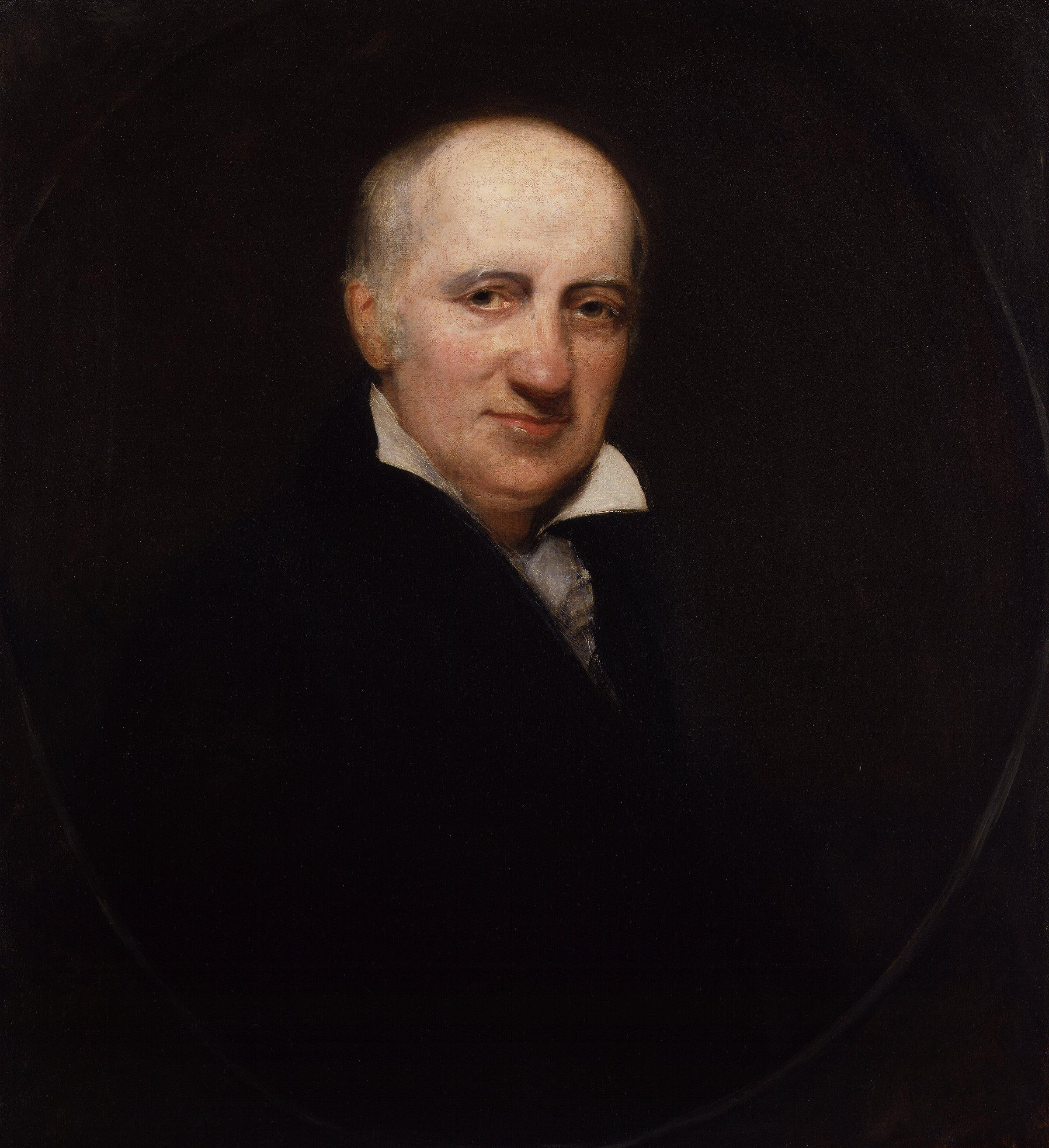
Portrait of William Godwin by Henry William Pickersgill [Public domain], via Wikimedia Commons


Monday, February 6, 2012

Vindication: a recap of resources

We are approaching the 220th anniversary of the publication of Mary Wollstonecraft's A Vindication of the Rights of Woman, generally agreed to mark the start of the struggle for women's rights, at least in the English-speaking world. It seems a good moment to recap the resources around this land-mark book.

Some modern readers still praise the vigour and directness of her writing, but it is fair to say that many others, unused to eighteenth century literary conventions, find it convoluted. One readability calculator estimated that you'd need 32 years of formal education before you could understand her 1792 magnum opus on first reading. High school and undergraduate students are understandably put off by this, as I can attest after a few years on Twitter, running a permanent search for her name. A typical tweet is along the lines of: "Essay due tomorrow. I hate Wollstonecraft." I reach out, as @1759MaryWol1797, linking to this blog: "Madam, you called my name. Are you more interested in my life (link) or my book (link) ?" Which often provokes responses rich in initialisms: "OMG Mary Wollstonecraft is on Twitter LOL!!!"

Fortunately, alternative versions of  A Vindication of the Rights of Woman are available. I tried to "translate" an excerpt, and one of my readers kindly pointed out in the comments that the exercise has been done before, and more thoroughly. Thus did I discover the delights of the erudite and benevolent Jonathan Bennett, who is donating his retirement to the world by translating Early Modern philosophy, including the Vindication. He doesn't simplify or shorten the classics, though; he limits his blue pencil to modernising the written style. Throughout February, I will be bringing you other versions, some of them quite ... drastic.

If you prefer your Vindication on video, we've looked at an amateur version of the Three-Minute Philosophy series, and the professional 30-minute Dutch Humanist "Dare to Think" episode. For those who haven't read the text itself, or who perhaps would like a refresher, I recommend Ian Johnston's 1998 lecture, kindly released to the public domain*. He is very strong on context, and on the intellectual relationship with Rousseau. He lays out the case for her as a liberal feminist -- and as a radical socialist: " I would not put it beyond the realm of possibility that Wollstonecraft is a radical wolf in the guise of a liberal sheep." He devotes the final long section to her attitudes towards sexuality.
 
There are conferences on two continents commemorating the 220nd anniversary of the publication. One, in the United States, looks broadly at Mary Wollstonecraft's legacies. The keynote speaker is was going to be biographer Janet Todd. The other, in Sweden, focuses more specifically on her philosophy, and not just that of women's rights. Sandrine Berges, this blog's resident philosopher and zombie-chaser extraordinaire, will be speaking there. (As she was at last summer's knowingly titled Man and Nature: From Descartes to Wollstonecraft.)

As I've said before,  I am very glad to see Mary Wollstonecraft's work, including books other than the second Vindication, given the light well beyond the field of women's studies. It is good to see modern philosophers engage and a Nobel Prize winner, addressing lawyers on international human rights, call her "the most neglected thinker of the Enlightenment".

Tomorrow: a heads-up for International Women's Day, in New York. And, over the month, several more entries on the Vindication.

-----------------------------------------------------------------------------------------------------
*I admire the breadth of work and the huge generosity behind Ian Johnston's offer:
This section lists the texts of various introductory and public lectures and supplementary notes prepared for college courses, particularly for Liberal Studies at Vancouver Island University (once Malaspina College). These are not scholarly studies of the works listed but rather initial introductions designed for readers who are encountering these texts for the first time. These materials are in the public domain and may be used, in whole or in part, by anyone without permission and without charge, provided the source is acknowledged.
I note that his visible site stats claim over 17 million page views, and am reminded of Cory Doctorow's dicutm that while it may be difficult to monetise fame, it is impossible to monetise obscurity. This university instructor is giving away a large chunk of of the fruits of his labour. An awful lot of people value what he has to offer, and that means a lot of eyeballs on his site. There are a few discreet Google ads, which did not distract from my enjoyment of the content. I hope they generate enough revenue to keep the author in first editions, if not second homes. Win, win, win.

Wednesday, June 29, 2011

Mary and motherhood: a start (with Melissa)

Melissa Benn is, inter alia, the author of Madonna and Child: towards a new politics of motherhood. She comments on Mary Wollstonecraft's take on maternity, a theme this blog will circle round and return to.

Wollstonecraft was not a mother when she wrote [A Vindication of the Rights of Woman], although it touches often on the theme of motherhood. Rearing a family, she argued, was a perfectly proper occupation for a woman, unlike taking an unhealthy interest in one's appearance, but it must be undertaken in a spirit of self-reliance. "To be a good mother, a woman must have sense and that independence of mind which few women possess who are taught to depend entirely on their husbands."

One of the saddest aspects of Mary Wollstonecraft's life is how profoundly she was changed by her personal experience of love and motherhood. ... [The Scandinavian Letters] speak of a very different Wollstonecraft to her earlier work. Their tone is sober and tender, particularly about her daughter Fanny:

I feel more than the dependent and oppressed state of her sex. I dread that she should be forced to sacrifice her heart to her principles, or principles to her heart. With trembling hand I shall cultivate sensibility, and cherish delicacy of sentiment. I dread to unfold her mind, lest it should render her unfit for the world she is to inhabit - Hapless woman! What fate is thine!

It is impossible not to feel touched by Wollstonecraft's personal tragedy two centuries on. She was a volatile woman who risked all for love. But she also lived in an age where economic independence for women was a rarity and unmarried motherhood a scandal. And, of course, childbirth itself was a far greater physical risk than it is today. Wollstonecraft died of blood poisoning barely two weeks after the birth of her second daughter. It is impossible not to feel deep gratitude to writers like her who have tried to argue for new ways of living for women, men and children, braving ridicule and hatred from the more conventional parts of society.

The Independent, "Historical Notes: From personal tragedy to new ways of living and old", 21 January 1999.