Wednesday, March 28, 2012
Learn with Lyndall Gordon
An Oxford study day near Mary Wollstonecraft's birthday. Ironic that she does not really appear in the title -- Revolutionary Lives: the Godwins and the Shelleys. Biographer Lyndall Gordon, whose talk on Mary and the Unitarians I
attended in May 2011, will be presenting 75 minutes of "A New Genus". The
day, Saturday 28 April 2012, recapitulates the quadrille played out in
the exhibition at the Bodleian, Shelley's Ghost (aka Our Mary, Her Husband, Their Daughter, and the Tousle-hair'd Poet), which I visited with Chihiro Umegaki, and which has recently been rehung at the New York Public Library.


Monday, March 26, 2012
Podcast: Rousseau, Macaulay and Wollstonecraft on Negative Education
Last Monday we looked at the first podcast from last month's philosophers' confab on Mary Wollstonecraft. That was Enlightenment Thinker by Karen O'Brien. This week it is the turn of Martina Reuter of Helsinki and Jyväskylä, Finland, speaking on Rousseau, Macaulay and Wollstonecraft on Negative Education.
In her Letters on Education, Catherine Macaulay adapts J.-J. Rousseau’s notion of negative education, emphasizing that the primary task of education is to protect children from harmful impressions. There is a certain tension in Macaulay’s use of the notion. Her belief in the active power of reason is much stronger than Rousseau’s and she does not seem to realize that Rousseau introduced the notion of negative education as an explicit critique of John Locke’s theory of education. In my presentation I will first examine Macaulay’s adaption of negative education and then, in the second part of the paper, I will argue that Mary Wollstonecraft seems to be less influenced by the idea of negative education than Macaulay. I suggest that Wollstonecraft’s slightly lesser worry about harmful impressions does not primarily follow from her belief in reason, which she shares with Macaulay, but rather from her conception of the imagination. According to Wollstonecraft’s notion of creative imagination, the imagination is not merely passively inflamed by impressions, but also able to create impressions and combine reason with passion.
Friday, March 23, 2012
Luddite confounded: Mary goes Android

...but fortunately some friends do, in this case the Chicago anarchist Voltairine de Cleyre, who befriended me on Twitter, disclosed herself as a Lost Daughter (i.e. one whose thinking followed the path Mary had cut), pointed me towards poetry, and more recently has alerted me to Android apps. I do not understand how any organisation can make money selling items that are legally and widely available for free, as old books out of copyright are, but there you go: clearly I am behind the times. For £0.61 you can acquire a four-in-hand*:
This book contain collection of 4 booksWilliam Godwin has one too; his costs a penny more, but offers seven books.
1. Mary: A Fiction [1788]
2. A Vindication of the Rights of Woman [1792]
3. Letters written during a short residence in Sweden, Norway and Denmark
4. Maria; or The Wrongs of Woman [1798]
---------------------------------------------
*Four-in-hand: a carriage drawn by four horses. Also, now, four books that can be read on one hand-held device.
Android image: Google [CC-BY-3.0 (www.creativecommons.org/licenses/by/3.0)], via Wikimedia Commons
Monday, March 19, 2012
Podcast: Enlightenment thinker
The one-day philosophers' confab in Sweden (which we covered earlier) has released its presentations as podcasts. Here's the first of them; the other four will appear on successive Mondays:
Karen O'Brien, Birmingham.Here is the official site, if you can't wait for more recordings. The audio is clear, but very quiet, though I have set everything I can to maximum. Eleven, even. (Spinal Tap can be an excellent intro to philosophy for some teens: sexism/sexist, inches/feet, perception/reality.)
"Mary Wollstonecraft: Enlightenment thinker"
In this paper O’Brien revisits and, to an extent, revises what she has written before about Wollstonecraft – in Women and Enlightenment in Eighteenth-Century Britain (Cambridge, 2009) – concerning her relationship to Enlightenment thought. O’Brien here specifically picks up on how Wollstonecraft’s fiction, Letters from Sweden and her two Vindications, develop a strand in Enlightenment thinking that is concerned with the insight into human rights (and specifically female rights) that comes from mutual recognition of affect and individual sensibility.
Friday, March 16, 2012
The Mary Wollstonecraft Centre
The brass plaque on the door said
I woke from a dream a few weeks ago with this image in my head. Yesterday I shared this vision with sensible people who did not laugh at me. Something is about to happen.
The Mary Wollstonecraft
and Richard Price Centre
for Women's Leadership
and Financial Literacy
I woke from a dream a few weeks ago with this image in my head. Yesterday I shared this vision with sensible people who did not laugh at me. Something is about to happen.
Wednesday, March 14, 2012
Dear Wm's scribblings
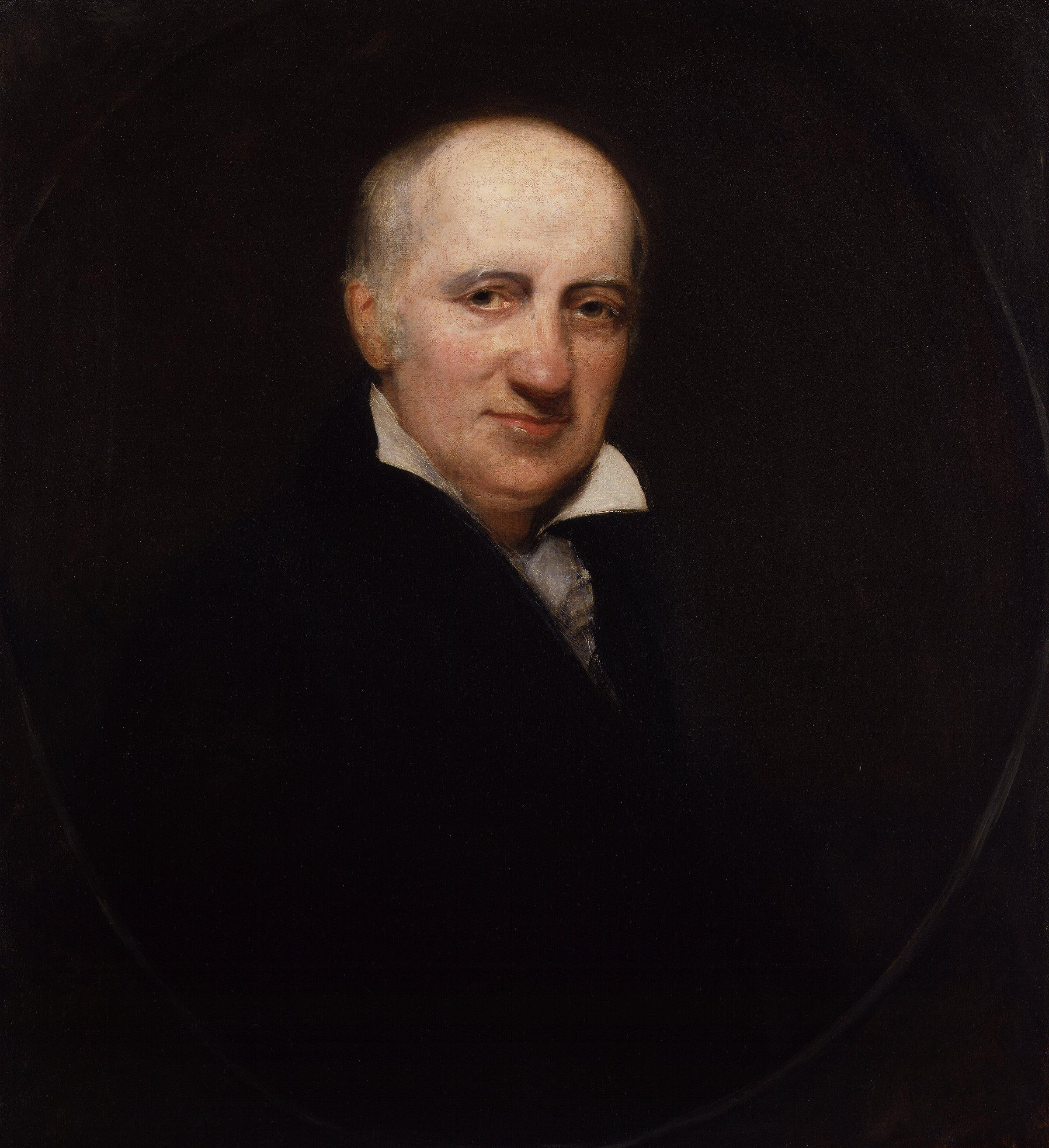
In September 1797, two weeks after his wife, Mary Wollstonecraft, died in childbirth, William Godwin confided to a friend, “I cannot write. I have half destroyed myself by writing. It does me more mischief than anything else. I must preserve myself, if for no other reason than the two children”. On the day of Wollstonecraft’s death, Godwin wrote half a dozen painful letters and throughout this volume one has the sense of peeling away at something unreachable as his grief ripens in real time. When he breaks the news to one of his closest friends, the radical writer Thomas Holcroft, Godwin’s mourning has grown starkly raw: “I have not the least expectation that I can now ever know happiness again. When you come to town, look at me, & talk to me, but do not (if you can help it) exhort or console me”. Nor were letters the only repository of his desperation. A groundbreaking new website devoted to Godwin’s extensive and often cryptic diaries, hosted by the Bodleian Library, reveals the instant when language itself momentarily failed. The entry for September 10, 1797, the day thirty-seven-year-old Wollstonecraft succumbed to a complication of so-called childbed fever, Godwin’s pen briefly flatlines, able to produce nothing more than four long strokes from left to right across the page.William Godwin was an influential writer, but more than that, he was a salonier, if the male form of the word exists: "His London sitting rooms became incubators for an astonishing number of poets, painters, radical theorists and mysterious travellers". He moved all over the city, as Mary did -- Grovier says his numerous abodes "reflects Godwin’s ability over these years to stitch himself tightly into the emotional fabric of an ever-widening social circle". These friends and acquaintances ranged "from supporters of revolution in France, such as Thomas Paine, to those who would oppose it, such as Edmund Burke; from celebrated natural philosophers and inventors such as Joseph Priestley and Thomas Wedgwood, to pioneering women writers such as Mary Hays and Elizabeth Inchbald."
Grovier praises the editorship of Pamela Clemit, who balances the needs of various readers and annotates the material "in a manner that is neither condescending to academic readers, nor too elitist in its scholarly presumptions". It's an undervalued skill. Even more invisible are the humanists behind the online diary, "a fully searchable, digitized engine that chugs smoothly through some thirty-two notebooks that Godwin kept between April 1788 and March 1836 (the month before he died), while providing access to high-resolution images of the original octavo leaves. The result is a trove of cross-reference against which one can read the broken epistolary record."
What kind of a person was Godwin? Would he and Mary have remained a couple, had she lived, or would she have grown beyond him? Grovier ascribes to Godwin "a supple and forgiving temperament, and a capacity for empathy that fostered moving insights into human motivation". He encouraged the young, for example: "there are many letters to aspiring writers and thinkers who have turned to Godwin for advice and on whom he warmly lavishes professional and personal encouragement." Here's a vignette of the man -- again, at the time when he was freshly widowed (widowered?), the wound still raw and gaping. He reaches out to a young man in trouble, imploring him:
to “cultivate cheerful impressions. Break off abruptly the thread of painful ones . . . . Do not indulge in visions & phantoms of the imagination, or place your happiness in something you may perhaps never obtain, but endeavour to make it out of the materials within your reach”.Grovier supposes that "on some level [Godwin] is strenuously trying to soothe himself". I can well imagine that he used similar words to soothe Mary's doubts and fears. Truly, a remarkable man.
Pamela Clemit, editor
THE LETTERS OF WILLIAM GODWIN
Volume One: 1778–1797
440pp. Oxford University Press. £100 (US $185).
978 0 19 956261 9
----------------------------------
Portrait of William Godwin by Henry William Pickersgill [Public domain], via Wikimedia Commons
Sunday, March 11, 2012
In her footsteps

the history of the area, looking at the existing buildings and what is planned for the future. You'll hear how Kings Cross kept London supplied with food and the areas links with the Beatles, the Olympics, Frankenstein and the French Revolution as well as many other stories.I've catalogued my previous walks, starting in St Pancras and progressing to Somers Town, via St Paul's and Southwark, with many more waiting in the wings: Bloomsbury, Barking, Spitalfields, and of course Newington Green.
The little church at the head of the village green was the final point for last Sunday's walk with Simon Cole of Hackney Tours. (I love the page on its ethos - how many tour companies have one of those?). This walk is called "Feminism, fame & infamy: How Hackney women have shaped our world" and makes very specific reference to Mary Wollstonecraft. He led this tour on the Sunday before International Women's Day, donating half the fee to the sculpture campaign.
--------------------------
*Pedants' note: the great apostrophe dilemma
Subscribe to:
Comments (Atom)